
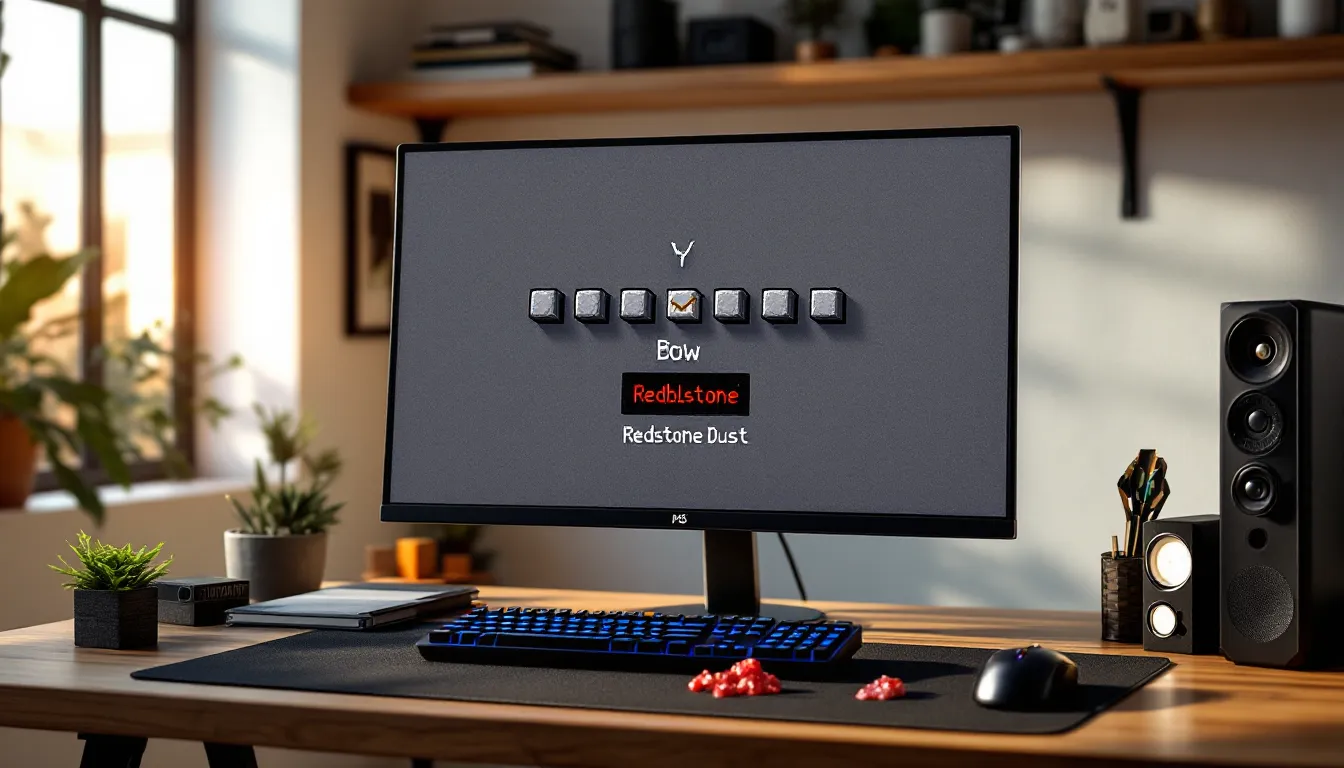
Dispensers are among the most versatile redstone components in Minecraft, capable of launching projectiles, distributing items, and powering elaborate automation systems. Whether you’re setting up arrow traps to defend your base from mobs or building a complex potion dispenser for PvP arenas, understanding the dispenser recipe minecraft players rely on is essential for taking your builds to the next level.
This guide covers everything from gathering materials and crafting your first dispenser to mastering advanced redstone circuits. By the end, you’ll know exactly how to integrate dispensers into your survival world, creative projects, and technical builds, complete with tips that seasoned players use to avoid common mistakes.
Key Takeaways
- The minecraft dispenser recipe requires seven cobblestone, one bow, and one redstone dust arranged in a U-shape pattern around the bow on a crafting table.
- Dispensers activate when powered by redstone signals and can shoot arrows, throw potions, place water or lava, and equip armor depending on loaded items.
- Dispensers face away from the player when placed, so positioning matters—stand in the direction you want items dispensed to ensure correct orientation.
- Redstone clock circuits, particularly hopper and observer clocks, enable automatic firing at adjustable rates, making dispensers ideal for arrow traps and defense systems.
- Jungle temples naturally contain two dispensers as part of their arrow trap mechanism, offering an early-game resource alternative to crafting.
What Is a Dispenser in Minecraft?
A dispenser is a redstone-activated block that can store up to nine stacks of items and automatically deploy them when powered. Unlike a chest, it doesn’t just hold items, it shoots arrows, throws splash potions, places water or lava, dispenses armor onto players, and even triggers TNT.
Dispensers have been part of Minecraft since Beta 1.2 (released in 2011) and remain a staple in both survival and creative modes. They’re primarily used in automated farms, mob traps, and defensive systems. The block features a carved face texture resembling a carved pumpkin, which indicates the direction items will be dispensed.
How Dispensers Work in Minecraft
When a dispenser receives a redstone signal, it randomly selects one item from its inventory and dispenses it. The behavior depends on what’s loaded:
- Arrows, eggs, snowballs, and other projectiles: Fired as if shot by a player
- Splash potions and lingering potions: Thrown in the direction the dispenser faces
- Armor pieces: Equipped onto a player or armor stand standing directly in front
- Flint and steel or fire charges: Ignite the block in front
- Water or lava buckets: Place or remove liquid sources
- Bone meal: Applies to crops or saplings in front of the dispenser
- TNT: Primes and drops TNT as an entity
- Shears: Shear sheep standing in front
- Most other items: Simply ejected as item entities
Dispensers face the player when placed, so positioning matters. They require a redstone signal to activate, buttons, levers, pressure plates, or redstone circuits all work.
Dispenser vs. Dropper: Key Differences
Many players confuse dispensers with droppers, but they serve different purposes:
Dispensers:
- Use or activate items (shoot arrows, throw potions, place armor)
- Interact with the environment (place water, ignite blocks)
- Ideal for traps, farms, and automated systems that require item activation
Droppers:
- Only drop items as entities (never activate them)
- Can transfer items into other containers like chests or hoppers
- Better suited for item transport and sorting systems
If you need something shot or deployed, use a dispenser. If you just need items moved or dropped, a dropper is more efficient and doesn’t waste durability on tools like shears or flint and steel.
Minecraft Dispenser Recipe: Materials You Need
Crafting a dispenser requires three materials: seven cobblestone blocks, one bow, and one redstone dust. These are all obtainable in early to mid-game survival, though the bow can be slightly tricky if you’re short on string.
Here’s the exact recipe layout for a crafting table:
[Cobblestone] [Cobblestone] [Cobblestone]

[Cobblestone] [ Bow ] [Cobblestone]

[Cobblestone] [Redstone Dust] [Cobblestone]
You’ll get exactly one dispenser per craft. Let’s break down where to find each material.
Where to Find Cobblestone
Cobblestone is one of the most abundant blocks in Minecraft. Mine any stone block with a pickaxe (wooden or better) to collect cobblestone. Stone generates naturally throughout the Overworld at Y-levels below 0 and comprises most cave systems.
If you don’t have access to natural stone, you can also create cobblestone by letting flowing water touch a lava source block. This method is slower but useful in skyblock or custom map scenarios.
How to Craft a Bow
A bow requires three sticks and three pieces of string. The crafting pattern is:
[ ] [Stick ] [String]

[Stick] [ ] [String]

[ ] [Stick ] [String]
Sticks are easy, craft them from wooden planks. String is the challenge. You can obtain string by:
- Killing spiders or cave spiders (most common method)
- Breaking cobwebs in mineshafts, strongholds, or igloo basements with a sword or shears
- Looting chests in dungeons or desert temples
- Trading with cats (they occasionally gift string as a morning present if you’re near a bed)
If you’re struggling with string, spend a night outside your base hunting spiders. They spawn frequently in low-light areas and drop 0-2 string per kill. Looting enchantments increase the drop rate.
Obtaining Redstone Dust
Redstone dust is mined from redstone ore, which spawns between Y-levels -64 and 15, with the highest concentration around Y-level -59 (as of Minecraft 1.18 and later). You need an iron pickaxe or better to mine redstone ore, stone and wooden pickaxes won’t work.
Each redstone ore block drops 4-5 redstone dust (more with Fortune enchantment). Redstone is plentiful once you start branch mining at lower levels. You can also find redstone dust in chests within dungeons, mineshafts, strongholds, and villages.
Step-by-Step Guide to Crafting a Dispenser
Once you’ve gathered seven cobblestone, a bow, and redstone dust, you’re ready to craft your dispenser. Here’s the exact process.
Crafting Table Setup
First, you’ll need a crafting table. If you don’t have one yet, craft it from four wooden planks arranged in a 2×2 pattern (you can do this in your inventory crafting grid).
Place the crafting table on the ground and right-click (or your platform’s equivalent) to open the 3×3 crafting interface.
Placing Materials in the Correct Pattern
Arrange your materials in the crafting table exactly as shown:
- Top row: Cobblestone, cobblestone, cobblestone
- Middle row: Cobblestone, bow, cobblestone
- Bottom row: Cobblestone, redstone dust, cobblestone
The bow goes in the center slot, redstone dust directly below it, and cobblestone fills the remaining seven slots forming a “U” shape around the bow and redstone.
Once the pattern is correct, the dispenser will appear in the result box. Click it to move it to your inventory. The bow will be consumed in the crafting process, it doesn’t matter if the bow is damaged or enchanted: any bow works.
Pro tip: If you’re crafting multiple dispensers, you’ll need multiple bows. Keep a spider farm or cobweb source handy for sustainable string collection.
How to Activate and Use a Dispenser
Crafting the dispenser is only half the equation. To make it functional, you need to power it with redstone and load it with items.
Powering Dispensers with Redstone
Dispensers activate when they receive a redstone signal. There are several ways to power a dispenser:
- Direct power: Place a redstone torch, lever, or button directly on or adjacent to the dispenser
- Redstone dust: Run redstone dust into the dispenser block
- Redstone repeaters: Extend signals or add delays
- Pressure plates or tripwires: Trigger dispensers when mobs or players step on them
- Observers: Detect block updates and send signals
- Redstone blocks: Provide constant power if placed next to the dispenser
The dispenser will activate once per redstone pulse. If you use a lever to provide constant power, it will only fire once when toggled on, it doesn’t continuously dispense.
For automatic firing, you’ll want a redstone clock (more on that in the advanced mechanics section).
Loading Items into Your Dispenser
Right-click the dispenser to open its inventory interface. It has nine slots, just like a dropper. Drag items from your inventory into the dispenser’s slots.
The dispenser will randomly select from loaded items each time it activates. If you want consistent output (like an arrow trap that always fires arrows), fill all nine slots with the same item type.
Important: The dispenser’s facing direction is set when you place it. It faces away from you, so stand in the direction you want items dispensed. You cannot rotate a dispenser after placement, you’ll need to break and replace it if the orientation is wrong.
Creative Dispenser Uses and Builds
Dispensers are staples in everything from simple traps to elaborate technical builds. Here are some of the most popular and practical applications.
Automatic Arrow Traps for Base Defense
Arrow dispensers are classic mob defense systems. Place a dispenser loaded with arrows facing a corridor or entrance, then connect it to a tripwire, pressure plate, or redstone clock.
When a mob (or unfortunate player) triggers the input, arrows fire automatically. For maximum damage, use a rapid-fire clock circuit to shoot multiple arrows in quick succession. Position multiple dispensers in a line for concentrated firepower.
Tip: Arrow dispensers have perfect accuracy and infinite durability, unlike bows. They’re especially effective in securing underground bases where mobs funnel through narrow passages.
Potion and Splash Potion Dispensers
Dispensers can throw splash potions and lingering potions, making them invaluable in PvP arenas and boss fight preparation areas. Load splash potions of Healing for a quick health station, or Harming potions for an offensive trap.
Lingering potions create area-of-effect clouds that persist for several seconds. Use them with tipped arrows or standalone for area denial in combat scenarios.
Item Sorting and Distribution Systems
While droppers are more common in item sorting, dispensers can distribute items to players automatically. Set up a dispenser loaded with tools, food, or gear at your base entrance, activated by a button.
For advanced item distribution, combine dispensers with hoppers and redstone comparators to create conditional dispensing systems that only activate when specific inventory thresholds are met.
Fire Charge and Lava Dispensers
Dispensers loaded with fire charges shoot fireballs that ignite blocks and deal damage, similar to blaze attacks. They’re perfect for dramatic trap designs or mob farm kill chambers.
Lava dispensers can place and remove lava sources when activated. This is useful for toggling lava blade traps in mob grinders or creating retractable lava moats around your base. Just make sure the dispenser is loaded with a lava bucket, it will place lava on the first pulse and retract it on the second.
Water dispensers work identically and are handy for automatic crop irrigation systems or fire suppression in redstone builds.
Advanced Dispenser Mechanics and Redstone Circuits
Once you’ve mastered basic dispenser usage, you can integrate them into sophisticated redstone contraptions. Here are two essential circuit types.
Clock Circuits for Automatic Firing
A redstone clock generates repeating pulses, causing a dispenser to fire continuously at set intervals. The simplest clock is a hopper clock:
- Place two hoppers facing each other
- Put 1-5 items in one hopper (more items = slower clock)
- Use a redstone comparator reading from one hopper to output a signal
- Connect the signal to your dispenser
The comparator will pulse on and off as items cycle between hoppers. This creates a reliable, adjustable firing rate.
For faster firing, use an observer clock:
- Place two observers facing each other
- Run redstone from either observer to your dispenser
This creates a rapid pulse (approximately 2 ticks or 0.1 seconds between shots). Perfect for high-DPS arrow traps.
Players looking for automated defense systems often rely on these clock designs to maintain constant pressure on mobs.
Observer-Based Dispenser Triggers
Observers detect block updates and emit a redstone pulse. You can create conditional dispenser systems by pairing observers with various block changes:
- Crop growth: Observer facing a farmland block detects when crops reach maturity, triggering a dispenser to apply bone meal or harvest with water
- Player detection: Observer watching a door or trapdoor detects when it opens, firing a dispenser
- Piston movement: Observer facing a piston detects extension/retraction, creating complex sequential circuits
Observers have a one-tick output delay and can face any direction, making them incredibly versatile for compact, responsive dispenser systems.
Common Dispenser Mistakes to Avoid
Even experienced players make these dispenser errors. Here’s what to watch out for:
Wrong facing direction: Dispensers face away from the player when placed. If your arrows are shooting into a wall instead of down a corridor, break and replace the dispenser while standing in the correct position.
Mixing dispensers and droppers: Droppers look similar but won’t shoot arrows or place water. Double-check your recipe, dispensers require a bow: droppers don’t.
Insufficient redstone signal: Dispensers need a direct or adjacent redstone signal. Redstone dust loses power after 15 blocks: use repeaters to extend signals in longer circuits.
Forgetting durability on special items: When dispensers use tools like shears, flint and steel, or hoes, those items lose durability. Eventually, they’ll break. Stock extra tools or use mending gear in long-term automatic systems.
Loading incompatible items: Not all items have special dispenser behavior. Blocks like dirt or cobblestone just pop out as entities, they won’t be placed. Check the Minecraft wiki for comprehensive lists of dispenser-compatible items if you’re unsure.
Powering continuously instead of pulsing: A lever that stays on only triggers one dispense. For repeated firing, you need a clock circuit or repeated button presses.
Placing dispensers in unloaded chunks: If your dispenser is in a chunk that unloads when you walk away, it won’t fire. Keep important dispenser systems within your base’s loaded area or use chunk loaders in modded environments.
Where to Find Dispensers Naturally in Minecraft
If you’re exploring instead of crafting, dispensers generate naturally in a few structures. Finding them can save resources in early game.
Jungle Temples
Jungle temples (also called jungle pyramids) spawn in jungle biomes and always contain dispensers as part of their arrow trap mechanism. When you enter the temple, there’s a hidden tripwire near the entrance that triggers dispensers loaded with arrows.
You’ll find exactly two dispensers inside each jungle temple. They’re typically hidden behind vines or in the walls near the entrance hallway. Breaking them gives you the dispenser block plus any remaining arrows inside.
Jungle temples also contain chests with loot, making them worth exploring even beyond the dispensers.
Woodland Mansions and Other Structures
While jungle temples are the most reliable source, dispensers may appear in other contexts depending on world generation and version updates:
- Custom maps and adventure maps frequently use dispensers for puzzles and traps
- Player-built structures on multiplayer servers
- Occasionally in modded structures if you’re using gameplay mods from sources like Nexus Mods
As of 2026, jungle temples remain the only vanilla structure guaranteed to have dispensers. If you’re speedrunning or playing a resource-scarce challenge map, raiding a jungle temple for dispensers is a legitimate strategy.
Conclusion
Mastering the dispenser recipe in Minecraft opens the door to automation, defense, and creative problem-solving that transforms how you approach both survival and technical builds. From gathering cobblestone and hunting spiders for string to wiring complex observer circuits, every step builds your redstone literacy.
Whether you’re setting up your first arrow trap or designing a full-scale potion distribution system, dispensers remain one of the game’s most reliable and versatile blocks. Experiment with different redstone inputs, test firing patterns, and don’t be afraid to break and rebuild, that’s how the best contraptions are born.
Now grab your pickaxe, hunt down some redstone, and start building. Your base defense (and your friends in multiplayer) will thank you.