
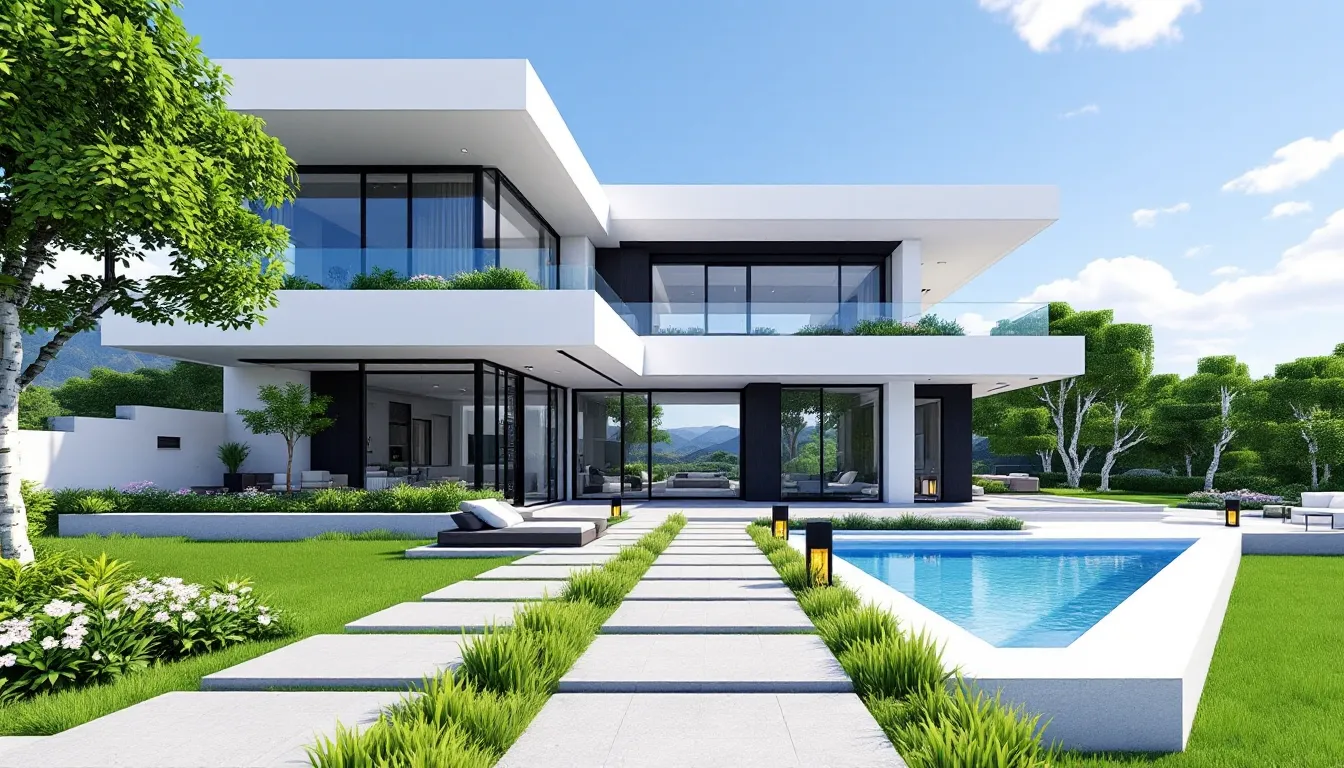
Modern architecture has taken over the Minecraft building scene, and it’s not hard to see why. Clean lines, bold color contrasts, and massive glass panels create homes that look straight out of an architect’s portfolio, except you built them with your own hands, block by block. Whether you’re returning to Minecraft after years away or you’ve been grinding survival mode since the Caves & Cliffs update, modern houses offer a satisfying build experience that balances creativity with structure.
This guide covers everything from material selection and design principles to step-by-step construction and interior design. You’ll learn how to plan layouts that actually make sense, avoid the mistakes that make modern builds look awkward, and add those finishing touches that separate amateur builds from showcase-worthy creations. Let’s break down what makes modern houses work in Minecraft and how to build one that’ll make your friends ask for a tour.
Key Takeaways
- Modern house designs dominate Minecraft building communities because clean lines, geometric shapes, and the block-based system align perfectly, making modern builds faster and more scalable than traditional styles.
- Essential modern house materials include white and gray concrete for walls, glass panes for windows, dark wood accents, and flat roofing materials, with 3-4 color palette restraint being critical for a cohesive aesthetic.
- Successful modern house layouts prioritize asymmetry, proper proportions (16×16 to 20×20 block footprints with 4-5 block ceiling heights), and clean lines that give purpose to every block placement.
- Advanced modern house techniques like cantilevered sections, floor-to-ceiling glass facades, and split-level designs on slopes create architectural drama and visual depth that separate impressive builds from amateur structures.
- Common modern house building mistakes include using too many materials, creating overly small windows, overdoing symmetry, and neglecting landscaping and hidden lighting that complete the professional aesthetic.
- Modern house interiors work best with minimalist furniture, hidden lighting sources (sea lanterns under carpet, glowstone behind stained glass), and optional redstone automation for smart home features like motion-activated lights.
Why Modern Houses Are the Most Popular Build Style in Minecraft
Modern houses dominate Minecraft building communities for reasons that go beyond aesthetics. The style works exceptionally well with Minecraft’s block-based building system, straight edges and geometric shapes align perfectly with the game’s grid.
Unlike medieval castles or fantasy builds that require extensive terraforming and organic shaping, modern architecture embraces the rigid structure. A well-executed modern house can be completed faster than traditional builds while still looking impressive. The style also scales beautifully: a simple modern starter home uses the same design language as a sprawling luxury villa.
The popularity surge really took off around 2019-2020 when builders started showcasing sleek contemporary homes on YouTube and Reddit. The introduction of concrete blocks in version 1.12 gave builders the perfect material for smooth, clean walls. Newer blocks like blackstone, deepslate, and tuff (added in recent updates) expanded the palette even further.
Modern builds also photograph well for screenshots and videos. The high contrast between white concrete, black glass panes, and dark oak creates visual punch that stands out in thumbnails and social media posts. For players who want their builds to get noticed, modern architecture delivers.
Essential Materials for Modern Minecraft Houses
Best Blocks for Contemporary Aesthetics
Concrete is the foundation of modern Minecraft architecture. White concrete, light gray concrete, and black concrete form the core palette for most builds. Unlike wool, concrete doesn’t burn and has a smooth, matte finish that reads as plaster or painted walls.
Quartz blocks offer a slightly different white texture with more depth. Smooth quartz and quartz pillars add subtle variation to large white surfaces. They’re pricier in survival mode, requiring Nether runs, but the visual payoff is worth it.
Glass and glass panes are non-negotiable for modern builds. Standard glass works, but many builders prefer white stained glass panes or light gray stained glass panes for a subtle tint that reduces the harsh transparency. Black stained glass panes create dramatic window frames.
Polished blackstone, deepslate tiles, and smooth stone work as accent materials and flooring. Polished blackstone especially shines for dark exterior sections and modern fireplaces.
Wood choices matter more than you’d think. Dark oak planks and stripped dark oak logs provide rich contrast against white walls. Stripped birch or acacia work for lighter, Scandinavian-inspired modern builds.
For roofing, smooth stone slabs, concrete slabs, or even dark oak slabs create the flat or low-pitch roofs that define contemporary design. Avoid traditional steep roofs, they break the modern aesthetic immediately.
Color Palettes That Define Modern Architecture
The classic modern palette is monochrome: white concrete walls, black concrete accents, gray glass, and dark oak trim. This combination never fails and works in any biome.
Warm modern builds use white concrete with orange concrete or terracotta accents, stripped acacia wood, and light gray glass. This palette suits desert and savanna locations perfectly.
Cool modern leans into light blue concrete, cyan concrete, white concrete, and stripped birch. Think minimalist Scandinavian design. This works beautifully in snowy biomes or near water.
Dark luxury modern uses black concrete, gray concrete, polished blackstone, and minimal white accents. Add in some crying obsidian for exterior lighting if you’re feeling bold.
The key is limiting your palette to 3-4 main materials. Modern architecture is about restraint. Too many colors or textures make the build look busy instead of sophisticated.
Planning Your Modern House: Design Principles and Layout
Asymmetry and Clean Lines
Modern architecture thrives on controlled asymmetry. Unlike symmetrical medieval builds, modern houses use offset sections, varying heights, and cantilevered volumes to create visual interest.
Start by sketching (even on paper) a basic floor plan with rectangular rooms of different sizes. Stack them in interesting ways, a two-story section next to a single-story wing, a protruding second floor over a recessed ground floor. The goal is creating depth and shadow play.
Clean lines mean avoiding unnecessary decoration. No random blocks sticking out, no cobblestone texture variation, no vines or clutter on exterior walls. Every block placement should have a purpose. Window frames should align horizontally across facades. Rooflines should be crisp and intentional.
Many builders working on simple modern structures focus on keeping horizontal and vertical elements perfectly aligned. Use scaffolding or temporary marker blocks while building to maintain straight lines.
Optimal Dimensions and Room Spacing
Modern houses need proper proportions to avoid looking cramped or awkwardly stretched. For a starter modern home, aim for a 16×16 to 20×20 block footprint with ceiling heights of 4-5 blocks in main living areas.
Living rooms should be at least 8×10 blocks to accommodate minimal furniture without feeling empty. Bedrooms can be smaller, 6×8 blocks, since modern design favors efficiency. Kitchens need 6×8 minimum for counters and island placement.
Hallways should be 2 blocks wide for that spacious modern feel. Single-block hallways feel cramped and break immersion.
For multi-level homes, plan vertical circulation carefully. Modern staircases often run along exterior glass walls or occupy central voids. Allocate a 3×6 block area minimum for stairwells.
Floor-to-ceiling ratios matter. A room that’s 12 blocks wide should have at least a 4-block ceiling height. Going higher (5-6 blocks) creates that airy, open-plan feeling modern architecture is known for.
Step-by-Step: Building a Simple Modern House for Beginners
Foundation and Frame Construction
Start by clearing and flattening your build site. Modern houses look best on level terrain or gentle slopes. Mark out a 16×12 block rectangle with temporary blocks, this will be your footprint.
Lay the foundation using smooth stone or polished andesite one block deep. This gives you a clean base and prevents grass from growing inside later.
Build the frame using concrete or quartz. Place corner posts first, single block columns at each corner, 4 blocks tall for the ground floor. Modern builds don’t need thick walls: single-block-thick walls are standard.
Connect the corners with horizontal blocks to create the outline. You now have a 4-block-tall rectangular frame. For a two-story build, extend the corner posts to 8-9 blocks and add a second floor outline at the 5-block height.
Adding Walls, Windows, and Roof
Fill in the walls with white concrete, leaving gaps for windows. Modern houses use large windows, so plan for 3-4 block wide horizontal windows or floor-to-ceiling glass sections.
For windows, use glass panes instead of full blocks, they’re thinner and look more refined. Frame windows with black concrete or polished blackstone for contrast. A typical modern window might be 4 blocks wide and 2-3 blocks tall, starting at ground level.
Create a front entrance by leaving a 2-block tall, 1-block wide opening. Use dark oak doors or iron doors for the modern aesthetic. Add a small overhang above the door using concrete slabs extended 2 blocks out.
For the roof, modern houses typically use flat roofs or very subtle slopes. Place smooth stone slabs or concrete slabs across the top of your frame, flush with the walls. For added detail, create a slight parapet by extending the walls 1 block above the roof level on some sides.
Add exterior lighting using lanterns recessed into walls or sea lanterns built into the ground along pathways. Modern builds avoid torches, they break the clean aesthetic.
Advanced Modern House Techniques for Experienced Builders
Multi-Level Structures and Cantilevered Sections
Once you’ve mastered basic modern builds, cantilevered sections add serious architectural drama. A cantilever is a section that extends outward without visible support underneath, think a second-story bedroom jutting out over the first floor.
To build a cantilever, construct your ground floor as normal, then extend the second floor 3-5 blocks beyond the first-floor walls. This creates an overhang that provides shade for windows below and adds depth to the facade.
For structural believability, use thicker support columns (2×2 or even 3×3) at strategic points on the ground floor. Even though Minecraft doesn’t require actual physics, the visual weight distribution matters for aesthetics.
Split-level designs create interest in modern homes built on slopes. Build one wing at ground level, then step up 3-4 blocks for the next section. This follows the terrain naturally while maintaining the modern aesthetic. According to building communities on Game8, split-level modern homes consistently rank among the most impressive player-created structures.
Connect different levels with interior staircases built from concrete stairs and slabs. Glass railings (using glass panes and fence posts) keep sightlines open.
Glass Facades and Floor-to-Ceiling Windows
Full glass walls are the signature of high-end modern builds. To create a floor-to-ceiling glass facade, frame a wall section with concrete or quartz pillars spaced 4-6 blocks apart. Fill the entire space between pillars with glass panes from floor to ceiling.
For even cleaner aesthetics, some builders use white stained glass panes which provide privacy while maintaining brightness. The slight tint makes interiors visible but not overexposed.
Corner windows require special attention. Use glass panes instead of blocks at corners to avoid thick intersections. The panes create thin mullions that look intentional rather than clunky.
For truly advanced builds, create double-height glass atriums. Build a two-story open space and install glass walls spanning both floors. Add an interior balcony overlooking the atrium for luxury villa vibes.
Remember that large glass sections need interior lighting to look good at night. Embed sea lanterns in floors or ceilings, or use glowstone hidden behind furniture.
Interior Design Ideas for Modern Minecraft Homes
Minimalist Furniture and Décor
Modern interiors embrace the “less is more” philosophy. Unlike cluttered medieval halls, modern rooms use carefully placed furniture with clean lines.
For seating, use quartz stairs or smooth stone stairs as chairs with white concrete slabs as backs. Arrange them around a dark oak trapdoor or polished blackstone slab coffee table. A simple L-shaped arrangement seats 4-5 players comfortably.
Kitchen counters work best as polished blackstone or smooth stone slabs raised on quartz blocks or white concrete. Add stone buttons as knobs, item frames with plates as stovetops, and a cauldron as a sink. Keep it minimal, one continuous counter along a wall looks more modern than broken-up sections.
For beds, use white or gray beds and frame them with dark oak planks or stripped dark oak logs as side tables. A single flower pot with a plant or a candle on each side table provides all the decoration needed.
Shelving can be created with dark oak fences as vertical supports and oak slabs as shelves. Space them 2 blocks apart vertically. Place books, plants in pots, or decorative heads sparingly, 3-4 items per room maximum.
Avoid clutter. Modern design means empty space is part of the aesthetic. A room with two pieces of well-placed furniture looks better than one crammed with details.
Smart Lighting and Redstone Automation
Modern homes demand sophisticated lighting. Visible torches are banned, use hidden lighting sources instead.
Embed sea lanterns or glowstone in floors and cover them with white carpet or light gray carpet. This creates ambient floor lighting perfect for hallways and living rooms. In bathrooms and kitchens, place light sources behind white stained glass panes in walls or ceilings for diffused panel lighting.
Redstone automation elevates modern builds from static structures to functional smart homes. A daylight sensor connected to interior lights automatically turns them on at night. Place the sensor on the roof and run redstone to redstone lamps hidden in ceilings.
For automatic doors, place pressure plates (stone or weighted) in front of entrances. This works especially well for glass sliding doors using sticky pistons and glass blocks.
Advanced builders incorporate hidden piston doors that retract walls into floors or ceilings. This requires more redstone knowledge but creates jaw-dropping effects. Resources on Twinfinite cover detailed redstone circuits for modern home automation.
Motion-activated lighting in hallways uses observer blocks detecting player movement. When you walk past, lights turn on for 10-15 seconds before shutting off. This requires a bit of redstone repeater timing but looks incredibly futuristic.
Landscaping and Exterior Features for Modern Builds
Pools, Patios, and Outdoor Living Spaces
Modern houses aren’t complete without outdoor living areas. An infinity pool is the ultimate modern flex. Dig a rectangular pool 2-3 blocks deep, line it with white concrete or light blue concrete, and fill it with water. For the infinity edge, let water flow over one edge into a lower catch basin, this creates the visual effect of water extending to the horizon.
Surround the pool with smooth stone slabs or quartz slabs as decking. Add lounge chairs using quartz stairs with white concrete slabs as backs. Place potted bamboo or flowering azalea in corners for minimal greenery.
Patios should use the same materials as the house to create visual continuity. A polished blackstone or dark oak plank patio off the living room extends the indoor space outside. Add a simple seating area and perhaps a fire pit (campfire surrounded by polished blackstone or concrete).
For covered outdoor areas, extend the roof overhang 3-4 blocks and support it with slender pillars. This creates shaded outdoor dining spaces perfect for multiplayer servers.
Modern Garden Design and Pathways
Modern landscaping is about geometry and restraint. Forget wild flower gardens, think curated planters and clean pathways.
Create raised planter boxes using dark oak planks or concrete frames, 1-2 blocks tall. Fill them with dirt and plant bamboo, flowering azalea, or birch saplings. Space planters 4-6 blocks apart in straight lines or geometric patterns.
Pathways should be straight or make clean 90-degree turns. Use smooth stone slabs, polished andesite, or concrete for path materials. A popular technique involves laying a 2-block-wide path with a different material (like polished blackstone) as a 1-block center stripe.
Builders who excel at white block aesthetics often use white concrete pathways bordered by black concrete for maximum contrast.
For lawn areas, keep grass trimmed (using shears to prevent random grass growth) or replace with moss blocks or short grass. Modern lawns are manicured, not wild.
Exterior lighting should be minimal and architectural. Recessed ground lights work well, dig down 1 block, place a sea lantern or glowstone, and cover with a white carpet or light gray carpet. Space these every 4-5 blocks along pathways.
Top Modern House Design Ideas and Inspiration
Beachfront Modern Villas
Beachfront modern villas take full advantage of ocean views with massive glass walls facing the water. Build these on white sand beaches using white concrete and light gray concrete as primary materials.
Design a ground floor that’s mostly open-plan, a combined living, dining, and kitchen area with a glass facade spanning the entire ocean-facing wall. Use polished diorite or white concrete for flooring.
Add a wooden deck extending 8-10 blocks toward the water using stripped dark oak logs as support posts and dark oak planks for decking. Include built-in seating (dark oak stairs) and a fire pit for evening ambiance.
Second-story master bedroom should cantilever over the deck, with floor-to-ceiling windows providing sunrise views. A small balcony accessed through glass doors adds luxury.
Incorporate a rooftop terrace with a small pool and lounge area. The white-on-blue color scheme against the ocean creates postcard-worthy screenshots.
Mountain Contemporary Retreats
Mountain modern homes work beautifully with natural stone and wood combinations. Use polished andesite or stone for lower levels and dark oak or spruce for upper sections.
Build into the slope rather than flattening everything, let the terrain inform the design. A split-level home with the entrance on the upper level and bedrooms stepping down the slope feels organic.
Large windows framing mountain views are essential. Position living areas to face valleys or peaks. Use birch wood or stripped spruce for ceiling beams visible from below, adding warmth while maintaining modern aesthetics.
Stone fireplaces work well in mountain retreats. Build a double-height fireplace wall using polished blackstone or deepslate tiles with a fireplace (use netherrack with fire on top, framed in stone). Players familiar with bunker construction often adapt similar stone-working techniques for mountain builds.
Add a wraparound deck using spruce planks with glass pane railings for unobstructed views.
Urban Modern Townhouses
Townhouses are perfect for multiplayer servers and city builds. Design tall, narrow structures, 8-10 blocks wide and 20-25 blocks tall, built side-by-side sharing walls.
Use black concrete and white concrete in bold geometric patterns for facades. One townhouse might be primarily white with a black accent column, while the next reverses the scheme.
Ground floors should include large windows for storefronts or living spaces. Use iron doors with buttons or pressure plates for entries. Second and third floors can be residential, with balconies (2-3 blocks deep) using iron bars or glass panes as railings.
Rooftop access is a must, add a small terrace with minimal furniture and potted plants. Some builders create rooftop gardens with grass blocks and flowering plants for a green space in the urban environment.
Townhouses look best when designed as a series, build 3-5 in a row with slight variations in height and facade details while maintaining design consistency.
Common Mistakes to Avoid When Building Modern Houses
Using too many materials is the most frequent error. Modern design requires discipline. Stick to 3-4 block types maximum for exteriors. Switching between quartz, concrete, stone, and wood all in one build creates visual chaos instead of cohesion.
Overly small windows break the modern aesthetic. Those single-block windows suitable for castle builds don’t work here. Modern homes need windows at least 3 blocks wide and 2 blocks tall. Go bigger when possible, floor-to-ceiling glass walls are a modern signature.
Symmetry overdose makes modern builds boring. Yes, some modern homes are symmetrical, but the best ones use offset elements, varying heights, and unexpected angles. A perfectly symmetrical box with windows looks like an office building, not a home.
Ignoring proportion creates awkward structures. A 30-block-tall house that’s only 8 blocks wide looks like a tower, not a modern home. Similarly, sprawling single-story mansions without height variation read as flat and uninspiring. Aim for pleasing proportions, roughly 1:1.5 or 1:2 width-to-height ratios for multi-story builds.
Clunky rooflines ruin otherwise solid builds. Modern architecture uses flat roofs, subtle slopes, or clean geometric roof shapes. Traditional steep A-frame roofs don’t belong on modern houses. If you want pitch, keep it minimal, 1-2 block rise over 10-12 blocks of horizontal run.
Forgetting interior-exterior connection is a missed opportunity. Modern architecture blurs the line between inside and outside. If your interior floor level is 2 blocks below exterior ground level, it looks wrong. Maintain level transitions and use large windows/doors to create flow.
Poor lighting kills the vibe at night. Visible torches stuck on walls are build-killers. Take time to plan hidden lighting, recessed fixtures, floor lighting under carpet, or redstone lamps in ceilings. The effort transforms a build from amateur to professional.
Neglecting the landscape around your modern house makes even great builds look unfinished. Wild grass growing against clean white walls, uneven terrain, random trees too close to the structure, all these break immersion. Clear the area, level ground, add pathways and minimal landscaping that complements the architecture.
Conclusion
Modern houses in Minecraft offer the perfect balance of challenging design and achievable execution. The principles are clear, clean lines, limited materials, bold geometry, and generous windows, but the application allows endless creativity. Whether you’re building a beachfront villa, mountain retreat, or urban townhouse, the fundamentals remain consistent.
The beauty of modern architecture in Minecraft is how well it scales with your skill level. Beginners can create impressive builds using simple rectangular forms and smart material choices. Advanced builders can push the style with cantilevered sections, complex multi-level layouts, and redstone automation that makes homes feel alive.
Remember that modern design rewards restraint. Every block should have a purpose. Every window placement should consider both interior function and exterior aesthetics. The empty spaces matter as much as the filled ones.
As you build, don’t be afraid to iterate. Modern architecture is forgiving in that way, if a section doesn’t work, the clean geometry makes it easy to tear down and rebuild without losing the overall structure. Start with a simple design, get comfortable with the material palette, then gradually incorporate advanced techniques.
Your modern house will become a landmark on any server or in any single-player world. It’s the build other players will teleport to for inspiration, the house that looks incredible in screenshots, and the base you’ll actually want to spend time in. Now grab some concrete, clear a build site, and start laying that foundation.