
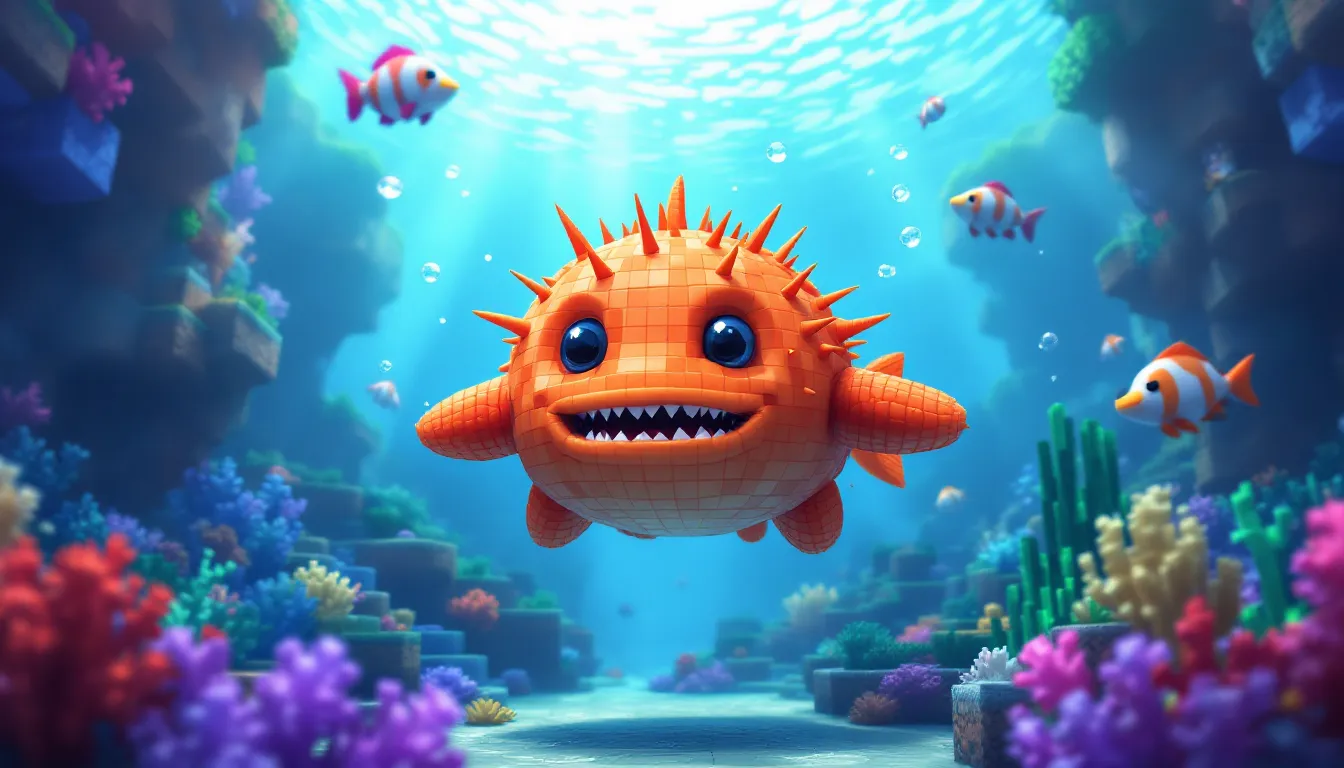
Pufferfish might be one of the most underrated, and dangerous, mobs in Minecraft. These spiky little fish pack a nasty punch if you’re careless, but they’re also surprisingly useful once you know what to do with them. Whether you’re hunting for potion ingredients, feeding your pet axolotl, or just trying to avoid a painful death by toxic fish, understanding pufferfish behavior is essential for any player diving into ocean biomes.
In this guide, we’ll break down everything you need to know about pufferfish in Minecraft: where they spawn, how to catch them safely, what they’re actually good for, and how to avoid getting poisoned in the process. Let’s immerse, just watch out for the spines.
Key Takeaways
- Pufferfish in Minecraft are passive mobs found in warm and lukewarm ocean biomes that inflate within a 5-block radius to deal poison damage, making them dangerous despite their harmless appearance.
- The primary use for pufferfish is brewing Potions of Water Breathing, which allows players to explore underwater structures like ocean monuments for 3–8 minutes.
- You can catch pufferfish efficiently using a fishing rod with Lure III enchantment or by scooping them into water buckets directly from warm oceans.
- AFK fish farms with automatic reel mechanisms provide a hands-off way to accumulate pufferfish at roughly a 13% catch rate from the fishing loot table.
- Avoid eating pufferfish as food since they inflict Hunger III, Poison IV, and Nausea II while restoring only 1 hunger point—drinking milk instantly removes the poison effect if you’re exposed.
What Is a Pufferfish in Minecraft?
A pufferfish is a passive mob that spawns naturally in ocean biomes. It’s part of Minecraft’s aquatic ecosystem and has been in the game since the Update Aquatic (Java Edition 1.13 / Bedrock Edition 1.4.0) back in 2018. But don’t let the “passive” label fool you, pufferfish have a unique defense mechanism that makes them one of the few mobs that can hurt you without technically being hostile.
When a player gets too close, pufferfish inflate to nearly double their size, extending venomous spines that deal Poison damage. This inflation happens automatically within a short range, so even if you’re just swimming by, you can take damage. The pufferfish itself doesn’t attack in the traditional sense, but proximity is all it takes.
Visually, pufferfish are small, orange fish with a rounded body. In their deflated state, they look harmless and will swim around like any other fish. Once inflated, they become a spiky ball of danger. They’re also one of the few fish mobs that can be caught with a fishing rod or scooped up with a water bucket, a mechanic that’s key to farming them.
Pufferfish drop themselves as an item when killed, and that item can be used for brewing, trading, or even eating (though we’ll get to why that’s a terrible idea later).
Where to Find Pufferfish in Minecraft
Pufferfish don’t spawn everywhere. You’ll only find them in specific ocean biomes, and knowing which ones saves you a lot of time if you’re hunting for them.
Warm Ocean Biomes
Warm ocean biomes are the primary spawning grounds for pufferfish. These biomes have a distinct aqua-blue water color and are typically located near desert, jungle, or savanna landmasses. You’ll recognize them by the abundance of tropical fish, coral reefs, and sea pickles.
Pufferfish spawn in groups of 1–3 in warm oceans, making them relatively easy to find if you’re in the right area. The spawn rate is decent, so you don’t need to search for hours, just cruise around a warm ocean and you’ll spot them soon enough.
Lukewarm Ocean Biomes
Lukewarm ocean biomes also support pufferfish spawns, though they’re slightly less common here. Lukewarm oceans have a lighter blue water color compared to regular oceans and usually border temperate or colder biomes. You’ll find some kelp and cod here, along with the occasional pufferfish.
If you’re having trouble locating a warm ocean, lukewarm oceans are a solid backup. The spawn rates are similar, and you can still gather pufferfish efficiently.
Pro tip: Use the /locate biome command (Java Edition 1.16+) to find warm or lukewarm oceans quickly if you’re not opposed to using commands. Otherwise, just head toward tropical-looking coastlines and you’re probably close.
How to Catch Pufferfish
There are two main methods for catching pufferfish in Minecraft, and both have their pros and cons depending on what you’re after.
Fishing Rod Method
The most straightforward way to catch a pufferfish is with a fishing rod. Pufferfish are classified as “junk” in the fishing loot table, but they have a roughly 13% chance of being caught when fishing in any ocean biome (not just warm or lukewarm). This means you don’t even need to be near where they spawn, you can fish them up from a regular ocean, deep ocean, or frozen ocean.
Just cast your line, wait for the bobber to dip, and reel in. You might catch cod, salmon, or actual junk items like leather boots, but pufferfish will eventually show up. This method is great if you’re setting up an AFK fish farm or just want to multitask while gathering resources.
Water Bucket Method
If you want a live pufferfish for transportation or display, use a water bucket. Right-click (or use the interact button) on a pufferfish with an empty bucket, and you’ll scoop it up as a “Bucket of Pufferfish.” This works the same way as bucketing tropical fish or axolotls.
The bucket method is faster if you’re already in a warm ocean and want to grab a few pufferfish to bring back to your base. You can place them in a custom aquarium or use them later for specific purposes. Just be careful when releasing them, they’ll inflate if you get too close, even in a controlled environment.
Best Enchantments for Catching Pufferfish
If you’re fishing for pufferfish, a few enchantments make the process much faster:
- Luck of the Sea III: Increases the chance of treasure and reduces junk, but pufferfish are technically junk, so this doesn’t help. Skip it if you’re specifically hunting pufferfish.
- Lure III: Reduces wait time between bites by up to 15 seconds. This is the best enchantment for fast pufferfish farming.
- Unbreaking III / Mending: Keeps your rod in good shape for long fishing sessions or AFK farms.
For maximum efficiency, prioritize Lure III. It won’t change the loot table, but it’ll speed up your catch rate significantly.
Understanding Pufferfish Behavior and Defense Mechanism
Pufferfish behavior is simple but deadly if you’re not paying attention. Here’s how their defense mechanism works and how to avoid taking unnecessary damage.
Inflation and Poison Damage
When a player (or most other mobs) comes within a 5-block radius, a pufferfish will begin to inflate. The inflation takes about a second, and once fully puffed, the pufferfish deals Poison damage and contact damage to anything that touches it.
- Poison II for 7 seconds (Java Edition) or Poison for 5 seconds (Bedrock Edition)
- 1 heart of direct damage per contact
The Poison effect drains your health over time, turning your health bar green and dealing damage every 1.25 seconds. Combined with the direct contact damage, a pufferfish can kill an unarmored player pretty quickly if you’re not careful.
Pufferfish will also damage other mobs, including guardians and drowned, making them a minor hazard in ocean combat situations. They deflate after the threat leaves their range, returning to their normal, harmless state.
How to Avoid Getting Poisoned
Avoiding pufferfish damage is straightforward once you know their range:
- Keep your distance: Stay more than 5 blocks away if you’re just swimming through.
- Use a fishing rod: Catch them from a boat or shore to avoid proximity altogether.
- Wear armor: Full iron or diamond armor negates most of the contact damage, though Poison will still chip away at your health.
- Drink Milk: If you do get poisoned, drinking milk instantly removes the Poison effect. Keep a bucket on your hotbar if you’re working near pufferfish.
- Use a shield: Blocking with a shield prevents contact damage, though it won’t stop the Poison effect if you’re within range.
If you’re setting up an aquarium with pufferfish, build it with glass walls and make sure players can’t accidentally swim into the tank. Pufferfish in captivity are just as dangerous as wild ones.
Uses for Pufferfish in Minecraft
Pufferfish aren’t just a novelty, they have several legitimate uses, though some are more practical than others.
Brewing Potions of Water Breathing
The primary use for pufferfish is brewing Potions of Water Breathing. These potions let you breathe underwater for 3 minutes (8 minutes with Redstone), which is essential for exploring ocean monuments, underwater caves, or long mining sessions beneath the sea.
To brew a Potion of Water Breathing:
- Place a Water Bottle in the brewing stand.
- Add Nether Wart to create an Awkward Potion.
- Add a Pufferfish to create the Potion of Water Breathing.
- (Optional) Add Redstone to extend duration to 8 minutes.
This is the most efficient way to handle underwater exploration, especially if you’re clearing out an ocean monument or farming prismarine. Many players rely on detailed brewing guides to optimize their potion setups for long underwater sessions.
Trading with Villagers
Master-level Fisherman villagers will buy 1–4 pufferfish for 1 emerald (Java Edition). This isn’t the most lucrative trade, but it’s a decent way to offload excess pufferfish if you’ve been fishing a lot. Fishermen are easy to level up with raw fish trades, so this is a low-effort source of emeralds.
Feeding Axolotls
You can’t breed axolotls with pufferfish, but you can feed pufferfish to an axolotl to trigger its regeneration ability. After an axolotl kills a mob, feeding it a pufferfish (or any tropical fish or bucket of fish) removes its cooldown, letting it hunt again immediately. This is niche but useful if you’re using axolotls for guardian farming or underwater mob grinding.
Food Source (Warning: Not Recommended)
Technically, you can eat a pufferfish. But you really, really shouldn’t.
Eating a pufferfish gives you:
- Hunger III for 15 seconds
- Poison IV for 60 seconds
- Nausea II for 15 seconds
- Restores 1 hunger point (half a drumstick)
You’ll lose way more health than you gain, and the nausea effect makes your screen wobble, which is disorienting. The only time eating pufferfish makes sense is for achievements, challenges, or trolling your friends on a server. Otherwise, stick to cooked fish.
How to Farm Pufferfish Efficiently
If you need a steady supply of pufferfish for potions or trading, setting up a farm is the way to go. There are two main approaches: AFK fishing and manual fishing with optimization.
Setting Up an AFK Fish Farm
AFK fish farms have been a staple of Minecraft for years, though Mojang has nerfed them in recent updates. As of Java Edition 1.16+, you need to fish in an “open water” area for the farm to work properly, basically, a 5×5×5 area of water with no obstructions.
To build an AFK fish farm:
- Dig a 5×5×5 pool of water (or use an ocean).
- Set up a note block and hopper mechanism to auto-reel your fishing rod (look up a current design, as mechanics vary by version).
- Hold down right-click (or weigh down your mouse/controller button).
- Walk away and let it run.
You’ll catch pufferfish along with other fish, enchanted items, and junk. The drop rate for pufferfish is about 13%, so you’ll get a decent haul over time. Just make sure your design is updated for your version, older 1×1 farms don’t work anymore in Java Edition.
Optimizing Your Fishing Setup
If you prefer manual fishing or want to speed up your catch rate:
- Use Lure III to cut wait times between bites.
- Fish in any ocean biome, you don’t need to be in a warm ocean since pufferfish are part of the general fishing loot table.
- Set up a small fishing dock or boat so you can fish comfortably without drowning or dealing with drowned mobs.
- Pair fishing with other tasks, like smelting or organizing inventory, to maximize your time.
Some advanced players use modded fishing setups to automate or enhance the process, especially on PC. Mods can add custom fish farms, loot table tweaks, or quality-of-life improvements that make fishing less tedious.
Pufferfish vs Other Ocean Mobs: Key Differences
Minecraft’s oceans are full of aquatic life, but pufferfish stand out in a few key ways. Here’s how they compare to other ocean mobs:
Pufferfish vs Tropical Fish:
Tropical fish are purely decorative and harmless. They come in dozens of color patterns and are popular for aquariums. Pufferfish, on the other hand, are dangerous and functional, they’re used for brewing and trading, not just decoration.
Pufferfish vs Cod/Salmon:
Cod and salmon are basic food sources with no special abilities. You can cook them for a solid 5–6 hunger points, and they’re easy to farm. Pufferfish can’t be cooked and are terrible as food, but they’re the only fish that brews potions.
Pufferfish vs Guardians:
Guardians are hostile mobs that shoot laser beams and spawn in ocean monuments. They’re far more dangerous than pufferfish and drop prismarine shards/crystals. Pufferfish are passive and only hurt you if you get too close, making them more of a nuisance than a real threat.
Pufferfish vs Axolotls:
Axolotls are tameable mobs that attack other underwater hostiles (except turtles and dolphins). They’re useful allies in combat and can be bred with tropical fish. Pufferfish can be fed to axolotls to reset their attack cooldown, but they can’t be used for breeding.
Pufferfish fill a unique niche: they’re dangerous enough to be a hazard, but useful enough to be worth farming. No other ocean mob does both.
Tips and Tricks for Working with Pufferfish
Here are some advanced tips and lesser-known tricks for dealing with pufferfish in Minecraft:
Build a pufferfish trap for base defense:
Place pufferfish in a narrow water channel near your base entrance. Any player or mob that swims through will take Poison damage. It’s not foolproof, but it’s a fun and unexpected deterrent on multiplayer servers.
Use pufferfish for potion brewing bulk runs:
If you’re prepping for an ocean monument raid, brew a double chest of Water Breathing potions beforehand. Combine pufferfish farming with a brewing station setup, and you’ll never run out mid-raid.
Keep a backup bucket of milk:
If you’re working in a pufferfish-heavy area (like a custom aquarium build), always carry milk. The Poison effect can sneak up on you, especially if you’re placing blocks near the tank.
Don’t bother with pufferfish as mob bait:
Some players try to use pufferfish to damage hostile mobs, but the poison effect is weak and inconsistent. Stick to traditional mob grinders or traps, pufferfish aren’t worth the effort for combat.
Collect pufferfish early for potion stockpiles:
If you’re planning any major underwater projects, start fishing for pufferfish as soon as you have a decent rod. You’ll want at least 10–20 on hand before tackling monuments or building underwater bases. Guides on optimizing underwater exploration often recommend stocking up early to avoid mid-project supply runs.
Use creative mode for aquarium testing:
If you’re building a decorative tank with pufferfish, test the layout in creative first. Make sure players can’t accidentally fall in or get too close to the glass. Pufferfish will inflate even in captivity, and the last thing you want is a death trap in your living room.
Conclusion
Pufferfish in Minecraft are a perfect example of risk and reward done right. They’re dangerous if you’re careless, but they’re also one of the few renewable sources for Water Breathing potions, an essential tool for any serious ocean explorer. Whether you’re farming them with a fishing rod, scooping them up with buckets, or just trying to avoid getting poisoned while swimming, understanding pufferfish behavior makes your ocean adventures a lot smoother.
Catch them smart, brew them into potions, and respect the 5-block rule. And whatever you do, don’t eat one unless you’re going for an achievement. Your health bar will thank you.