
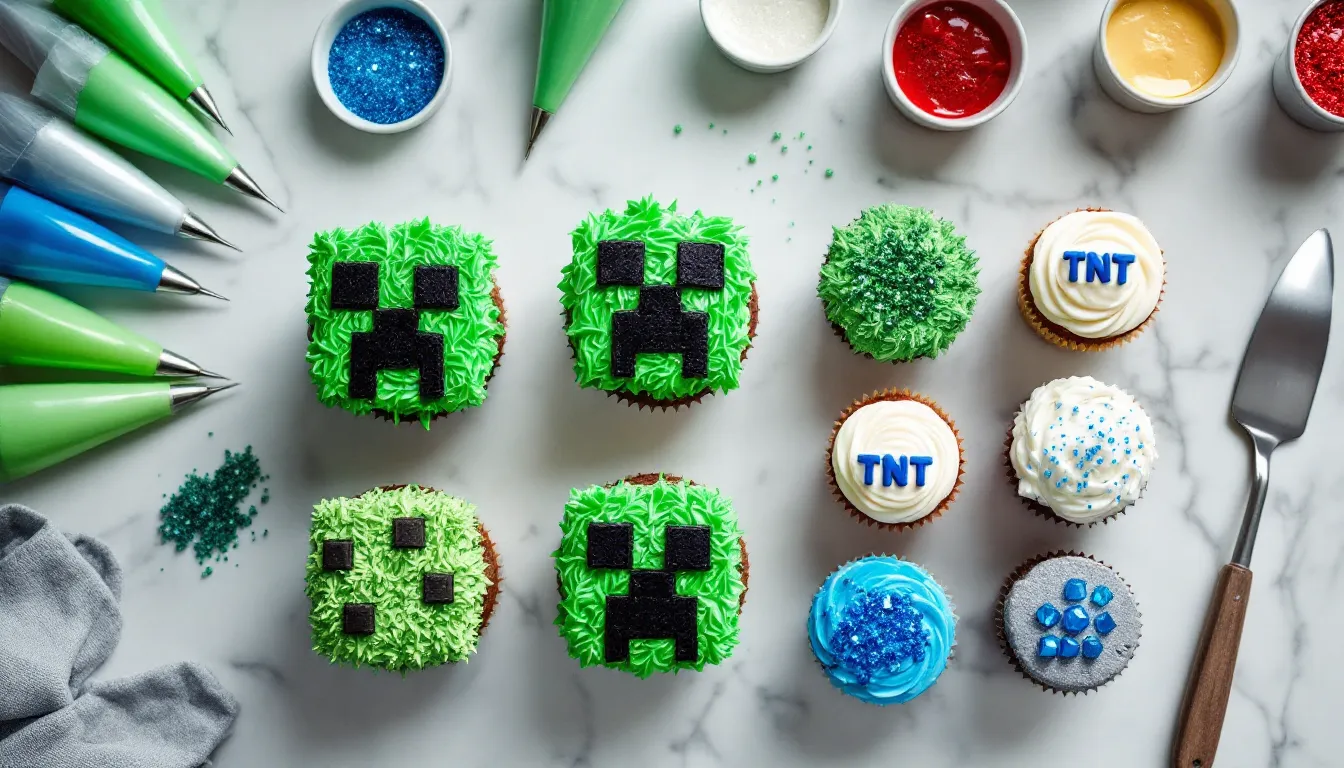
Minecraft parties have evolved beyond just playing the game, they’re full-blown themed events where every detail counts. Whether you’re planning a birthday bash for a kid who’s obsessed with building redstone contraptions or hosting a LAN party with fellow crafters, the food needs to match the blocky aesthetic. Cupcakes are the perfect canvas for Minecraft designs: they’re individual, stackable, and you can turn each one into a miniature pixel-art masterpiece.
This guide covers everything from baking vibrant green Creeper cupcakes to recreating diamond ore blocks with edible glitter. We’ll break down specific recipes, decoration techniques, and tools that’ll help you achieve that signature pixelated look without needing a crafting table IRL. No filler, no generic party advice, just practical recipes and decorating methods that actually work.
Key Takeaways
- Minecraft cupcakes are ideal for gaming parties because their blocky aesthetic translates perfectly to clean, pixelated designs that don’t require pastry chef skills.
- Gel food coloring produces more vibrant, game-accurate colors than liquid coloring—use 4-6 drops per batch and mix shades like Creeper green (3 parts leaf green + 1 part brown) for authenticity.
- Square piping tips like Wilton’s #789 or Ateco’s #133 are essential for achieving pixelated patterns; practice on parchment paper first and hold the bag perpendicular for uniform squares.
- Layer decorations strategically by chilling frosting between applications (10 minutes at a time) to prevent colors from bleeding and to create sharp, clean lines on fondant or buttercream details.
- Combine buttercream for flavor and ease with fondant elements only where you need razor-sharp edges, such as character faces or TNT letters, to balance decoration precision with practical execution.
- Transport decorated Minecraft cupcakes in individual compartment carriers, remove them 30-45 minutes before serving to restore flavor, and keep them in shade at outdoor parties to prevent buttercream melting.
Why Minecraft-Themed Cupcakes Are Perfect for Gaming Parties
Minecraft’s visual style translates better to cupcake decorating than almost any other game. The blocky, pixelated aesthetic means you’re working with clean lines, simple color blocks, and recognizable patterns, no need for fine detail work that requires pastry chef skills.
Each cupcake becomes a buildable element. You can arrange them in grids to form larger structures, stack them vertically like actual blocks, or scatter them across the table as individual terrain pieces. The modular nature mirrors the game’s core mechanic: building with individual blocks.
The game’s icon status helps too. Even non-players recognize Creepers, grass blocks, and TNT designs instantly. That universal recognition means your themed cupcakes work for mixed-age parties where not everyone’s grinding for netherite but everyone gets the reference.
Practically speaking, cupcakes solve the serving problem at gaming parties. No cutting, no plates stacking up, minimal mess. Players can grab one between matches without pausing the action for five minutes while someone portions out cake slices.
Essential Ingredients and Tools for Minecraft Cupcakes
Cupcake Base Ingredients
Start with a reliable vanilla or chocolate base recipe. You’ll need:
- 2 cups all-purpose flour
- 1¾ cups granulated sugar
- ¾ cup unsalted butter (room temperature)
- 3 large eggs
- 1 cup whole milk
- 2½ teaspoons baking powder
- 1 teaspoon vanilla extract
- ½ teaspoon salt
For colored bases like Creeper green or Enderman purple, add gel food coloring directly to the batter. Gel produces more vibrant colors than liquid without affecting batter consistency. Use 4-6 drops per batch depending on intensity needed.
Red velvet works specifically for TNT cupcakes. Substitute 2 tablespoons cocoa powder for 2 tablespoons flour, add 1 tablespoon red gel coloring, and include 1 teaspoon white vinegar for that classic red velvet tang.
Frosting and Decoration Supplies
American buttercream remains the most forgiving frosting for decorating:
- 1 cup unsalted butter (softened)
- 4 cups powdered sugar
- 2 teaspoons vanilla extract
- 2-4 tablespoons heavy cream
This recipe pipes cleanly, holds shape at room temperature, and accepts gel coloring without breaking. Make separate batches for each color rather than trying to portion and color a single batch, it’s easier to achieve consistent shades.
For fondant work, purchase pre-colored fondant in black, white, brown, and green. Rolling your own and coloring takes significantly more time. Wilton and Satin Ice both make quality options available at craft stores.
Edible glitter, luster dust, and edible gems are essential for ore cupcakes. Blue and teal luster dust creates convincing diamond sparkle, while green gems work for emerald ore.
Minecraft-Specific Decorating Tools
Square piping tips are game-changers for achieving pixelated patterns. Ateco makes a #133 multi-opening tip that pipes small squares simultaneously, perfect for rapid grass texture application.
A small offset spatula helps apply frosting in clean, flat sections. The offset angle gives better control when creating distinct color zones like grass block layers.
Parchment paper and food-safe markers let you draw templates. Print Minecraft block textures at actual size, trace onto parchment, then use as stencils by placing directly on frosted cupcakes while piping.
Toothpicks work for detail corrections and for mixing custom colors in small quantities. Keep a cup of warm water nearby for cleaning tips between color changes, dried frosting in piping tips will ruin your clean lines.
Classic Creeper Cupcakes: Step-by-Step Recipe
Baking the Perfect Green Cupcake Base
Creepers demand a specific shade of green, not lime, not forest, but that middle-ground moss green from the game’s texture files. Mix gel colors to hit it: start with 3 drops leaf green and 1 drop brown per standard cupcake batch.
Add coloring after combining wet ingredients but before mixing with dry. This ensures even distribution without overmixing the final batter. Overmixing develops gluten and creates dense, tough cupcakes instead of light, fluffy ones.
Fill cupcake liners two-thirds full. Green batter looks darker when raw, it’ll lighten slightly during baking. Test one cupcake first if you’re unsure about the shade. Bake at 350°F for 18-20 minutes until a toothpick comes out with just a few moist crumbs.
Let cupcakes cool completely before frosting. Warm cupcakes melt buttercream and turn clean lines into blurry messes. If you’re in a rush, pop them in the fridge for 15 minutes once they’ve cooled to room temperature.
Creating the Iconic Creeper Face Design
The Creeper face consists of black squares on green, eight total blocks forming eyes, nose, and mouth. There are several decoration methods popular among gaming communities depending on skill level.
Method 1: Fondant squares (sharpest edges)
Roll black fondant to ⅛-inch thickness. Cut into uniform squares using a ruler and pizza cutter, you need two larger squares for eyes (approximately ¾-inch each) and six smaller squares for the nose and mouth sections.
Apply a thin green buttercream layer to the cupcake top first. This acts as glue for fondant pieces. Arrange the face pattern: two eye squares at the top, two nose squares centered below, and four mouth squares forming an inverted T-shape underneath.
Method 2: Piped buttercream (easier, kid-friendly)
Frost the entire cupcake with green buttercream smoothed flat with an offset spatula. Let it set in the fridge for 10 minutes so the base layer firms up.
Fill a piping bag with black buttercream fitted with a small round tip (Wilton #3 or #4). Pipe thick squares by applying steady pressure and moving slowly in a box pattern. Fill in the centers by continuing to pipe in a spiral motion until solid.
The piped method won’t have razor-sharp corners but works better for outdoor parties where fondant might sweat or for younger kids helping with decoration.
Grass Block Cupcakes: Building Edible Terrain
Layering Brown and Green Frosting
Grass blocks are Minecraft’s most iconic terrain element, brown dirt base with bright green top, separated by a distinct color line. Getting that clean division between layers is the technical challenge.
Prepare two frosting batches: one chocolate brown using cocoa powder (2 tablespoons per standard buttercream recipe) or brown gel coloring, and one bright grass green (4 drops leaf green gel).
Apply brown frosting to the bottom two-thirds of each cupcake. Use a piping bag or spatula, working around the sides and covering the bottom of the top surface. You want full coverage with no cake showing through.
For the green layer, pipe a thick ring around the top edge first, then fill in the center. Use an offset spatula to spread and flatten. The ring technique creates a natural boundary and prevents the two colors from bleeding together while you’re smoothing.
Chill decorated cupcakes for 5-10 minutes before adding texture details. The firm frosting base won’t shift when you add the textured top layer.
Adding Textured Details for Realism
Minecraft grass has subtle pixel variation, not smooth, not chaotic, just slightly irregular. Recreate this with a grass piping tip (Wilton #233 or similar) or a fork.
Grass tip method: Hold the piping bag perpendicular to the cupcake, squeeze gently, and pull straight up to create small spikes. Cover the entire green section with these upward pulls, slightly overlapping for full coverage. Vary the height slightly by changing pressure, perfect uniformity looks too artificial even for a blocky game.
Fork method: Drag a fork lightly across the green frosting in multiple directions. The tines create fine lines that mimic the game’s pixel texture. This works best with slightly softer frosting, if yours has been chilled too long, let it sit at room temperature for 5 minutes.
Some decorators add small brown “dirt specks” using a toothpick to dot tiny amounts of brown frosting onto the green section. This mimics partially-worn grass blocks from the game but is optional, clean grass blocks are equally recognizable.
TNT Block Cupcakes for Explosive Flavor
Red Velvet Base Recipe
TNT blocks call for red cupcakes, and red velvet delivers both color and flavor that stands out from standard vanilla. The subtle cocoa undertone adds complexity without going full chocolate.
Modify the base recipe:
- 2¼ cups all-purpose flour
- 1½ cups granulated sugar
- 1 teaspoon baking soda
- 1 teaspoon salt
- 2 tablespoons cocoa powder
- 1½ cups vegetable oil
- 1 cup buttermilk (room temperature)
- 2 large eggs
- 2 tablespoons red gel food coloring
- 1 teaspoon white vinegar
- 1 teaspoon vanilla extract
Mix dry ingredients separately. Combine wet ingredients including the gel coloring. When you combine them, mix just until incorporated, red velvet is particularly prone to becoming dense with overmixing.
The vinegar reacts with baking soda for extra lift and helps activate the cocoa’s flavor. Don’t skip it. Bake at 350°F for 18-22 minutes. Red velvet stays slightly more moist than vanilla, so a few crumbs on the toothpick are fine.
Decorating with Red and White Patterns
TNT blocks feature red sides with white “TNT” lettering and white tops with red lettering. For cupcakes, simplify to a top-down view: white background with red details.
Frost the entire cupcake with white buttercream, smoothed flat. This is your canvas. Let it set briefly in the fridge so the red decorations won’t sink into soft frosting.
For the red pattern, you have two approaches:
Fondant letters (cleaner look): Roll red fondant thin and cut out the letters T-N-T using letter cutters or a knife. Arrange horizontally across the white frosting, pressing gently to adhere.
Piped letters (faster): Use red buttercream in a piping bag with a small round tip (#3). Pipe block-style letters, think squared-off, pixelated font rather than cursive. The game’s TNT texture uses a bold, thick font, so make letters chunky.
Add decorative elements by piping a red border around the top edge or creating a red crosshatch pattern in the corners. Some decorators pipe small red explosive “sparkles” radiating from the letters using star-shaped bursts.
Character-Inspired Cupcakes: Steve, Alex, and Enderman
Steve and Alex Face Cupcakes
Steve and Alex share the same blocky face structure with different color palettes. Both require precision with square shapes, their faces are literally pixelated in-game.
For Steve: Use light tan/peach frosting as the base skin tone (mix ivory gel with a tiny amount of brown). His face needs brown pixel squares for hair, eyes, nose, and beard.
Flatten the frosting smoothly, then use one of these methods:
- Edible image method: Print Steve’s face on edible frosting sheets (available online or at bakery supply stores). Cut to size and place on frosted cupcakes. This is the easiest route for getting pixel-perfect accuracy.
- Hand-piping method: Use brown buttercream with a small square tip. Pipe his hairline across the top third, two square eyes, a small vertical line for nose, and his characteristic beard outline. Reference the actual game skin for exact placement.
Alex uses the same technique with different colors: orange frosting for hair, green frosting for eyes (she has bright green irises while Steve’s are brown/black). Her face is slightly more defined with more visible features, so consider using a reference image while piping.
Skin tone accuracy matters less than getting the pixelated structure right. Even slightly off-color frosting reads as the character if the pixel pattern matches.
Mysterious Enderman Purple Cupcakes
Enderman cupcakes work best as abstract representations rather than detailed faces. The character’s most recognizable features are the black body and glowing purple eyes with particle effects.
Use dark chocolate cupcakes with black or very dark gray buttercream frosting. Achieve true black by mixing chocolate buttercream with black gel coloring, black coloring alone often looks gray.
For the purple eyes, create glowing effects using multiple techniques stacked:
- Base eyes: Place two bright purple candy pieces (M&Ms work) or pipe two purple buttercream circles where eyes would go
- Glow effect: Use purple luster dust or edible pearl dust mixed with vodka (it evaporates, leaving just the shimmer). Paint around the candy pieces with a small brush
- Particles: Pipe tiny purple dots around the cupcake randomly using a toothpick dipped in purple frosting, mimicking the particle effect Endermen emit
Some decorators add small fondant blocks in various colors held in the Enderman’s “hands” (positioned at the edge of the cupcake), referencing how they pick up blocks in-game.
Diamond Ore and Emerald Ore Cupcakes
Working with Edible Glitter and Gems
Ore blocks in Minecraft feature gray stone backgrounds with embedded gems that catch light. Recreating this requires combining matte and sparkle elements for contrast.
Diamond ore uses bright cyan-blue gems against gray. Start with gray buttercream (mix black gel into white frosting gradually, it’s easy to overshoot). Frost cupcakes smoothly and let them set.
For the diamonds themselves:
- Edible gems/jewels: Blue candy gems or rock candy pieces give three-dimensional sparkle. Press 3-5 pieces into the frosting in an irregular pattern
- Luster dust: Mix blue and teal luster dust with a drop of clear vanilla extract. Paint irregular diamond shapes onto the gray frosting. The alcohol evaporates, leaving metallic shine
- Combination method: Place one or two larger candy gems, then paint luster dust around them for a mixed-size ore vein effect
Emerald ore follows the same technique with green elements. Use bright green edible gems or paint with green luster dust. Emeralds in-game are slightly larger than diamonds, so use fewer, bigger gem pieces, 2-3 per cupcake instead of 4-5.
Edible glitter works but creates a different effect than luster dust. Glitter gives overall sparkle while luster dust lets you paint specific gem shapes. For maximum accuracy to game textures, luster dust wins. Many crafters check community-created texture references to match the exact gem patterns.
Gray Frosting Base Techniques
Getting gray frosting right is trickier than it looks. Too much black gel makes it dark and muddy: too little leaves it looking off-white under certain lighting.
Start with 1 cup white buttercream and add black gel one drop at a time, mixing thoroughly between additions. You want medium stone-gray, similar to cobblestone. Test the shade by frosting a small piece of parchment, frosting often looks darker in the bowl than spread out.
For texture that mimics stone, use a textured frosting technique:
- Apply gray frosting roughly with a spatula, leaving it unsmoothed
- Dab with a paper towel to create irregular texture
- Alternatively, use a grass piping tip to pipe small irregular bumps across the surface before adding gems
The stone texture provides contrast for the smooth, shiny gems you’ll add on top. Completely smooth gray backgrounds make gems harder to distinguish visually, especially in party lighting.
Fondant vs. Buttercream: Choosing Your Decorating Method
When to Use Fondant for Sharp Pixelated Edges
Fondant excels at creating clean, geometric shapes with razor-sharp edges, exactly what Minecraft’s aesthetic demands. It rolls flat, cuts cleanly, and maintains shape without spreading or melting.
Best fondant applications:
- Character faces: Steve and Alex faces with precise pixel squares
- Creeper faces: Perfectly uniform black squares with hard edges
- Block patterns: TNT letters, ore gem shapes, or grass block side patterns
- Toppers: Three-dimensional elements that need to hold shape
Fondant downsides are worth noting. Many people find the taste less appealing than buttercream, it’s sweeter and chewier. Working with it requires different skills: rolling to consistent thickness, preventing drying and cracking, and achieving smooth attachment to cupcakes.
For outdoor parties or warm venues, fondant performs better than buttercream in heat. It won’t melt into a puddle at 85°F like buttercream will. If your gaming party is in a garage without AC during summer, fondant is the practical choice.
Buttercream Techniques for Easier Application
Buttercream offers forgiving application, easier color mixing, and better flavor for most people. It’s also significantly faster, no rolling, no drying time, just pipe or spread.
Achieve surprisingly clean pixelated looks with buttercream by:
- Chilling between layers: Apply base color, refrigerate for 10 minutes, then add details on the firm surface
- Using templates: Place parchment paper templates on frosted cupcakes, pipe around the edges, then remove the template
- Piping with square tips: Square tips create more geometric patterns than round tips
- Offset spatula smoothing: A small offset spatula creates flatter surfaces than a regular knife
For mixed designs, combine both methods. Use buttercream for the base frosting and larger color blocks, then add fondant elements only where you need ultra-precise details like letters or small squares.
Crusting buttercream (recipes with higher shortening content) bridges the gap. It firms up more than regular buttercream, taking details better while maintaining that creamy buttercream flavor.
Pro Tips for Achieving the Perfect Pixelated Look
Using Square Piping Tips and Templates
Square piping tips are non-negotiable for serious Minecraft cupcake work. Standard round tips create circles and curves, exactly what you’re trying to avoid. Square tips produce geometric patterns that instantly read as blocky and pixelated.
Wilton makes a #789 square tip that works for larger squares. For smaller pixels, Ateco’s #133 multi-opening tip pipes multiple small squares simultaneously, perfect for grass texture or rapid pattern work.
Technique matters with square tips:
- Hold the piping bag perpendicular to the cupcake surface, not at an angle
- Apply steady, even pressure, variations create irregular squares
- Stop pressure before pulling away to avoid tails on corners
- Practice on parchment paper first: square tips behave differently than round
Templates shortcut the precision problem. Print Minecraft block textures at cupcake-top size (typically 2 inches diameter). Trace onto parchment paper, cut out sections to create stencils.
Place the template on your frosted cupcake and pipe or paint through the openings. Remove carefully to reveal clean patterns. This works especially well for complex patterns like TNT text or detailed ore veins.
For repeated designs across dozens of cupcakes, create reusable templates from thin plastic sheets (available at craft stores). They clean easily and won’t tear after three uses like parchment.
Food Coloring Mixing Guide for Minecraft Colors
Minecraft’s color palette is specific. Generic “green” or “blue” won’t match the game’s distinctive shades. Mix gel food colorings to hit these key colors:
Creeper green: 3 parts leaf green + 1 part brown
Grass green: 4 parts leaf green + 1 part lemon yellow
TNT red: Use no-taste red gel at full strength (bright, pure red)
Diamond cyan: 3 parts sky blue + 1 part teal
Enderman purple: 2 parts violet + 1 part royal blue
Stone gray: Start with 1 drop black per ¼ cup white frosting, add gradually
Steve’s skin: 3 parts ivory + 1 part tan + tiny amount (knife-tip) of pink
Cobblestone: 2 parts black + 1 part brown per ¼ cup white frosting
Gel colors intensify as they sit. Mix frosting colors 30 minutes before use if possible, letting them develop fully. What looks slightly too dark in the bowl often looks perfect once spread.
Keep color references pulled up on your phone or printed out. Game screenshots work, but dedicated guide sites with color breakdowns help when you’re comparing subtle shade differences under kitchen lighting.
For very small amounts of custom colors, use toothpicks to mix. Dip the toothpick in gel, swirl into a small amount of white frosting, and build color gradually. This prevents wasting entire frosting batches on color experiments.
Printable Cupcake Toppers and Edible Images
Printable toppers offer a shortcut when you need dozens of cupcakes decorated quickly or when your piping skills aren’t up for detailed character faces. Edible images and printed paper toppers both work, each with advantages.
Edible frosting sheets print directly on special edible paper with edible ink. You apply them directly to frosted cupcakes where they become part of the frosting. They’re completely edible and taste slightly sweet.
Purchase pre-printed Minecraft designs online or print custom designs with an edible ink printer. Many local bakeries offer edible printing services, send them your designs and they’ll print sheets you can cut.
Application process: Frost cupcakes smoothly with white or light-colored buttercream. Cut printed images into circles slightly smaller than cupcake tops. Peel the backing carefully (they’re fragile) and place onto frosted surface, smoothing gently from center outward to remove air bubbles.
Edible images work best with buttercream bases. Fondant-covered cupcakes need a thin layer of piping gel applied first for adhesion.
Paper toppers (non-edible) offer sharper graphics and brighter colors. Print Minecraft designs on cardstock, cut them out, and attach to toothpicks or lollipop sticks. Insert into cupcakes like flags.
Paper toppers advantages:
- Higher resolution: Home printers produce sharper images on paper than edible printers
- Cost-effective: No special supplies needed beyond cardstock and printer ink
- Dimensional options: Create 3D elements by folding or layering paper
- Keep as party favors: Guests can remove toppers before eating and keep them
Design your own toppers using free Minecraft assets or find free templates online. Standard sizes work well: 2-inch circles for flat toppers or 2×3-inch rectangles for folded dimensional toppers.
Combine approaches: Use edible images for character faces, paper toppers for decorative elements like pickaxes, swords, or block icons that extend above the cupcake for visual interest.
For large batches, set up an assembly line. Print and cut all toppers first, frost all cupcakes, then apply toppers rapid-fire rather than completing one cupcake at a time.
Pairing Your Cupcakes with Gaming Party Themes
Coordinating Decorations and Table Setup
Minecraft cupcakes deserve a setup that extends the blocky aesthetic beyond just the food. Transform your party space into a biome using simple materials.
Table covering: Use green tablecloths or butcher paper for grass biome themes. For Nether parties, go with red. End dimension themes call for black or dark purple with scattered purple accents.
Cupcake displays: Stack cupcakes in grids or pyramids that mimic block structures. Tiered cupcake stands work, but building block-shaped risers from cardboard wrapped in colored paper creates more authentic Minecraft geometry. Create “floating islands” by suspending platforms at different heights with clear fishing line.
Biome clustering: Group cupcakes by type into biome sections. Grass blocks and Creepers in one zone, diamond ore and stone cupcakes in a “cave” section, TNT cupcakes in a “explosive zone.”
Signage: Add small signs using cardstock mounted on craft sticks, labeled with Minecraft-style names: “Creeper Cakes,” “Diamond Ore Treats,” or “TNT Blocks.” Use the game’s characteristic font (Minecraft’s font is called Minecrafter and is available free).
Lighting: String up LED torch lights or craft foam torches for ambient lighting that references in-game lighting mechanics. For End-themed parties, use purple LED strips.
Props: Scatter toy Minecraft figures, printed block cubes, or craft foam pickaxes and swords around the cupcake display. Create a backdrop using printed Minecraft landscapes or hang mob faces on the wall.
Keep serving tools themed too. Use green or brown serving platters for grass blocks, gray or stone-patterned plates for ore cupcakes.
Minecraft-Themed Party Game Ideas
Cupcakes are better with context. Run Minecraft-themed games between multiplayer sessions or as activities for younger party-goers not actively gaming.
Pin the Block on the Creeper: Classic pin-the-tail variation. Blindfolded players try to place TNT blocks on a Creeper face poster made with an AI poster designer.
Resource Scavenger Hunt: Hide toy diamonds, emeralds, and gold nuggets around the party space. Give participants pickaxes (foam or cardboard) and buckets to collect them. Trade resources for cupcakes, diamonds worth a Creeper cupcake, emeralds worth an ore cupcake, etc.
Build Competition: Supply real building blocks (Legos, wooden blocks, or cardboard boxes). Challenge teams to build recognizable Minecraft structures in 10 minutes. Winner gets first pick of cupcake types.
Mob Freeze Dance: Play Minecraft soundtrack music (C418’s albums). When music stops, call out a mob name, everyone must freeze in that mob’s pose. Creeper (arms at sides), Enderman (arms extended), Spider (hands and feet on ground), etc.
Cupcake Decorating Station: Set up a DIY decorating area with plain frosted cupcakes, piping bags with colored frosting, and fondant pieces. Let guests create their own Minecraft designs to take home.
Trivia Challenges: Ask Minecraft questions between gaming rounds. First correct answer wins a specific cupcake design. Categories: crafting recipes, mob behaviors, biome features, update history.
Time party games to match your guests’ energy. Run active games like scavenger hunts before gaming sessions when energy is high. Save decorating stations or trivia for breaks between Minecraft multiplayer rounds.
For LAN parties with adults, cupcakes work as victory rewards. Winner of each match gets first cupcake pick, creating in-game stakes tied to real-world treats.
Storage and Transport Tips for Decorated Cupcakes
Decorated Minecraft cupcakes require careful handling, hours of detailed piping work can get destroyed in seconds if you’re careless with transport or storage.
Short-term storage (same day, pre-party):
Refrigerate decorated cupcakes in single layers. Place them on cookie sheets or in cupcake carriers with individual compartments. Don’t stack unless you’re using tiered carriers designed for it.
Cover loosely with plastic wrap tented above the cupcakes so wrap doesn’t touch decorations. Better option: use large plastic storage containers where cupcakes sit on the bottom and the lid provides clearance above.
Remove from refrigeration 30-45 minutes before serving. Cold cupcakes mute flavors and create condensation on decorations as they warm. The condensation can blur piped details or make fondant pieces slide.
Overnight storage:
Buttercream-decorated cupcakes store fine overnight in the refrigerator, covered. Fondant decorations might sweat when removed from cold storage, this creates moisture that softens fondant and can cause colors to bleed.
For fondant-decorated cupcakes stored overnight, let them come to room temperature inside their covered container. Keep the lid on for the first 20 minutes to prevent rapid temperature change and condensation.
Transport methods:
Cupcake carriers with individual wells are safest for decorated cupcakes. Brands like Snapware or Wilton make carriers holding 12 or 24 cupcakes with locking lids.
For quantities beyond standard carriers, use cardboard flats from bakery supply stores. These are shallow boxes with individual cupcake indentations. Stack them carefully, never more than two high.
Drive carefully. Cupcakes shift during sudden stops or turns. Place carriers on flat surfaces (trunk floor or passenger floor mat) rather than seats where they might slide.
Delicate decorations (tall toppers, three-dimensional elements):
Transport these decorations separately and attach on-site. Bring a small container with extra frosting as “glue” for reattaching any pieces that shift.
For paper toppers on sticks, either insert them after arriving or ensure they’re short enough not to hit the carrier lid. Bent toppers look sloppy.
Heat management:
Buttercream melts at around 80-85°F. Fondant holds shape longer but can soften. In hot weather, transport cupcakes in a cooler with ice packs separated by cardboard (don’t let ice packs directly touch cupcake containers). Or run AC in the car and transport cupcakes in the coolest area.
Venue setup matters too. Don’t place cupcakes near heat sources, in direct sunlight, or outside in summer without shade. Even perfectly decorated cupcakes turn into frosting puddles in 90°F heat.
For outdoor parties, use fondant decorations over buttercream when possible. Set up the cupcake display in shade, ideally with a fan nearby for air circulation.
Conclusion
Minecraft cupcakes combine the game’s iconic blocky aesthetic with practical party food that actually tastes good. Whether you’re piping perfect Creeper faces with square tips or pressing edible gems into gray ore cupcakes, the techniques in this guide give you multiple approaches based on your skill level and available time.
The modular nature works in your favor, each cupcake is its own small project, so you can mix difficulty levels. Knock out simple grass blocks for bulk numbers, then spend extra time on detailed Steve faces or glittering diamond ore for centerpiece cupcakes.
Start with one or two designs for your first Minecraft party. Master Creepers and grass blocks, then expand your repertoire for future events. The combination of recognizable game elements, pixelated visual style that’s naturally forgiving, and individual servings makes these cupcakes a solid choice for gaming parties from kids’ birthdays to adult LAN events.