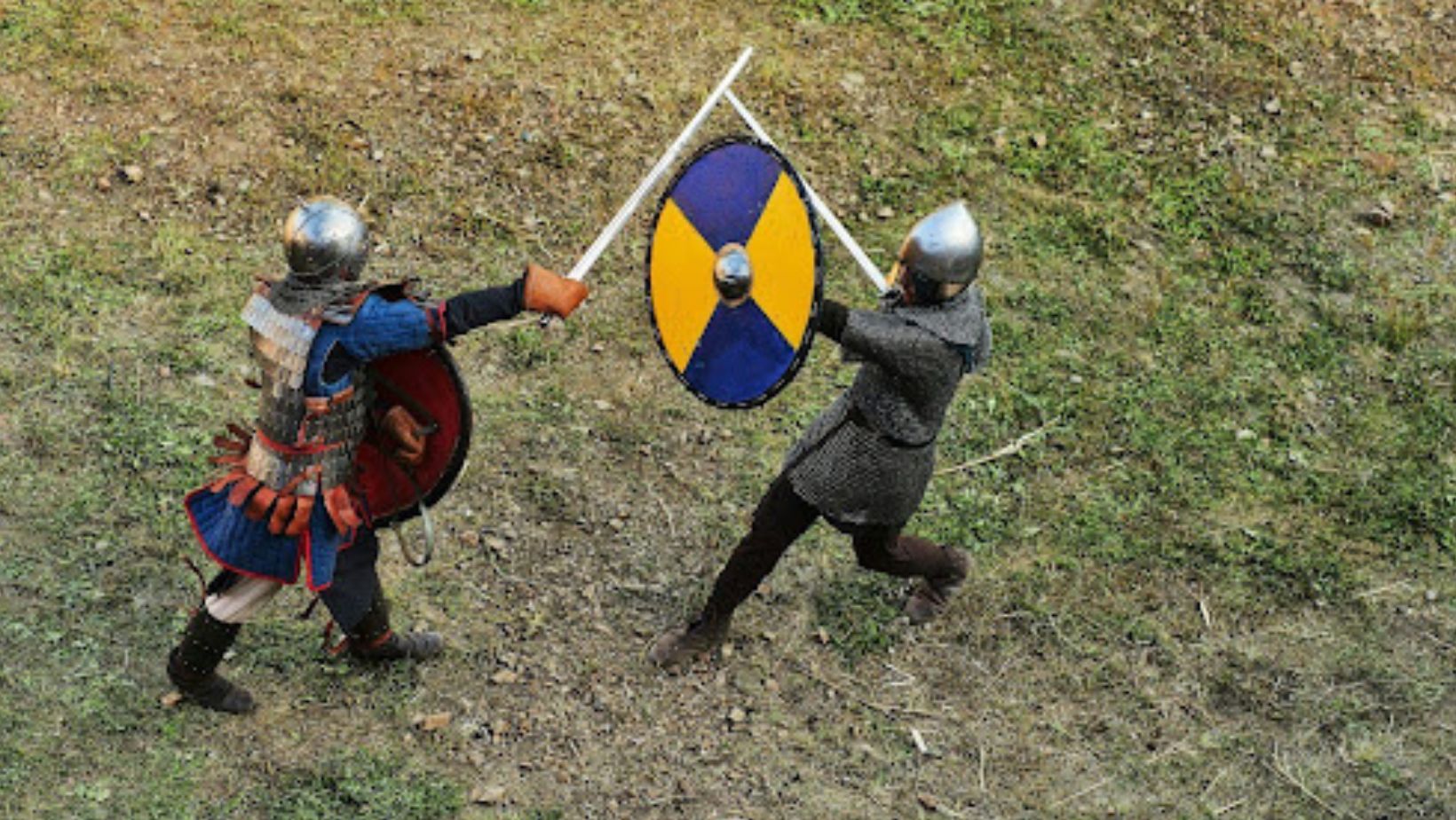
People today associate buhurt with its current status as a worldwide competitive sport which involves full-contact armored combat. People now consider medieval shields to be an essential part of their combat strategies. Fighters in the modern arena use well-designed shields as tactical systems which control their movements and fighting patterns and their ability to dominate specific areas.
The evolution of modern shield design is driven by brands such as Medieval Extreme which create shields that combine historical design principles with measurable performance standards. The current dual shield defender needs to perform more than basic blocking duties. The device must resist multiple impacts while providing clinch control and enabling arm movements which decrease total physical stress.
Shields In Historical Warfare
Shields originated as some of the earliest personal protective devices in combat. The first protective shields developed from Bronze Age plaques to iron-reinforced wooden shields which protected soldiers by stopping attacks and directing impact energy away from their bodies. The design of round shields with central bosses established itself as the primary shield type for early European battles because the boss functioned to protect soldiers from incoming attacks while establishing the handle position.
The High Middle Ages introduced heater shields because they provided specialized combat protection through their ability to protect fighters while allowing them to move freely in both mounted and foot combat situations.
The 14th to 15th centuries saw the introduction of large pavise shields which provided infantry and crossbowmen with temporary protection during siege operations. The shield evolved beyond its defensive purpose because it became essential for executing military tactics through its use in shield walls and its function as protective cover for ranged soldiers who fought to dominate territory.
| Era | Shield Type | Typical Function |
| Early Middle Ages | Round shield with boss | Deflect and absorb melee blows |
| High Middle Ages | Heater shield | Balanced torso protection, mounted and infantry use |
| Late Middle Ages | Pavise shield | Mobile defensive cover in siege and ranged contexts |
| Renaissance | Buckler and small shields | Close-quarters deflection and parry |
Tactical Comeback In Modern Buhurt
The development of modern plate armor systems which provide better protection in smaller packages should have rendered all shields useless according to many people. The rules of buhurt competitions establish that participants must use shields as their primary defense weapon. Competitive buhurt matches bring back shield use from historical battlefields which saw shields disappear through ranged attacks and polearm weapons.
The Dueling Shield for Armored Combat [71×52] designed a one-on-one duel with its curved profile which protects the elbow and forearm while keeping the design light for combat movements. Its 8 mm thickness with leather-reinforced edges provides a reliable deflection surface which decreases weapon impact that reaches the user’s arm.
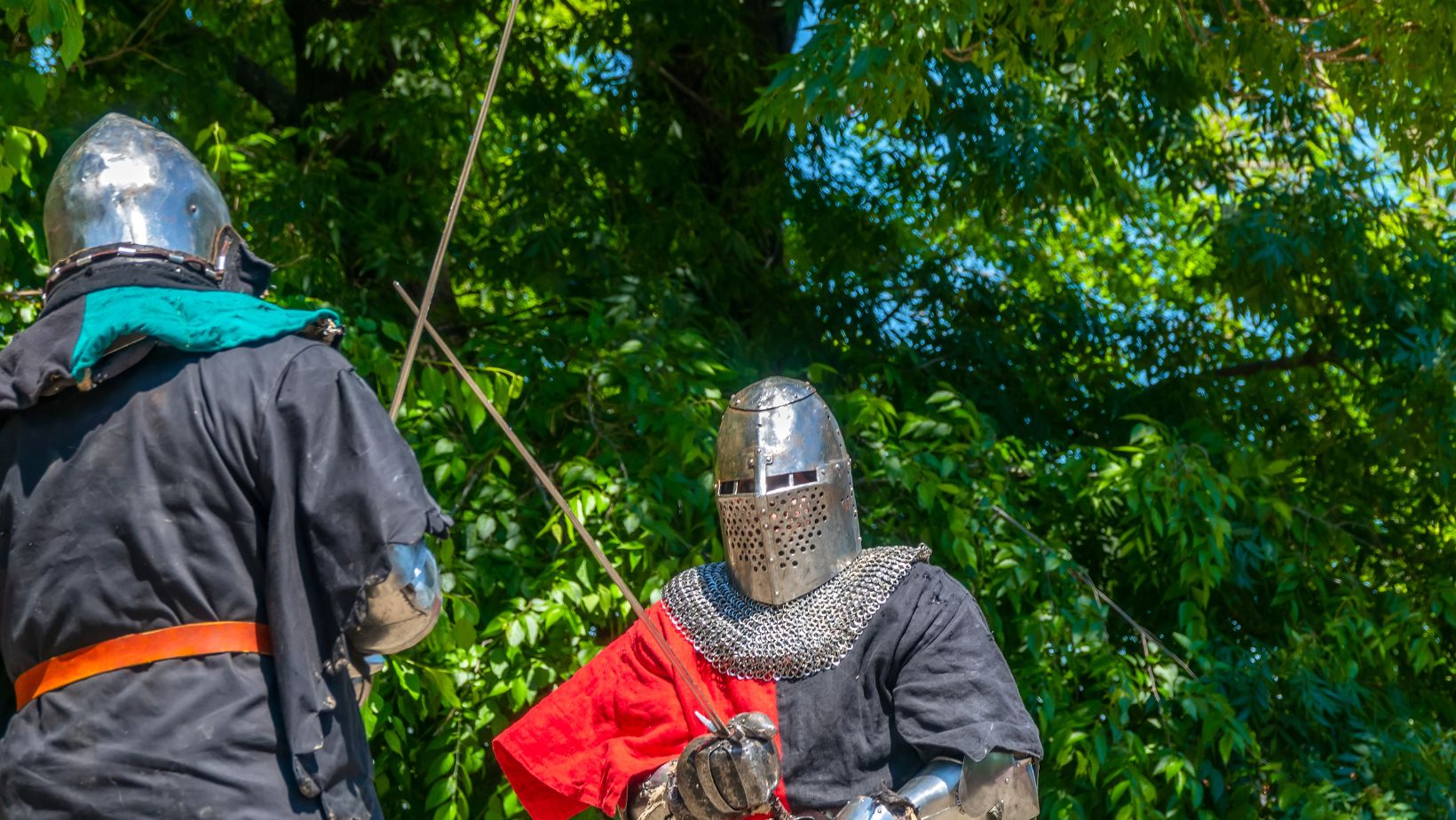
The Heather Shield for Armored Combat [~72×57] and Basic Heather Shield [~75×46] represent two shield designs which deliver maximum protection because they can endure powerful attacks while remaining lightweight for extended use. The shields fulfill present-day fighters’ need for protective devices which provide different defense options.
- Shields must distribute impact forces without compromising joint range of motion.
- Different shield shapes and sizes change engagement strategies and energy expenditure.
- Lightweight central-grip shields favour quick deflection and counter-strike positioning.
The construction of medieval shields used wooden cores which had metal rims strengthened because they needed to protect the shield while the boss functioned as a hand guard and a deflection protection pivot. The shields incorporate engineered cores which feature leather-reinforced edges to handle impact protection while enabling easier repair processes.
Materials And Construction Differences
The combination of advanced materials which include high-grade formation woods and reinforced laminate layers enables two essential performance capabilities which include (1) controlled energy transfer away from the user and (2) predictable failure modes under load conditions. This requirement meets the safety standards which competitive organizations establish through their official technical specifications for shield performance.
Another important development is the integration of ergonomic strap systems and articulation points. Modern strap designs operate differently from historical static straps because they consider human arm movement patterns which occur during extended physical activity to help fighters maintain optimal shield positions that improve their combat performance.
Team Strategies Built Around Shields
The 5v5 and 30v30 buhurt melee formats function as mass team battle environments which use shields as their main tactical elements. Teams that understand spatial control can use shielded fighters at the front to absorb initial blow waves which create tempo advantages for unshielded fighters to strike or flank.
Teams can use larger shields to create temporary protective barriers which protect their members during heavy combat situations, enabling teams to either regroup or initiate counterattacks. Shield use in buhurt tactical planning resembles positional play in team sports because it enables teams to control space while they disrupt opponent movements through their strategic shield positioning.
Competitive buhurt players who want to take control of fights while safeguarding their teammates and creating favorable match conditions should investigate all available shield systems.