
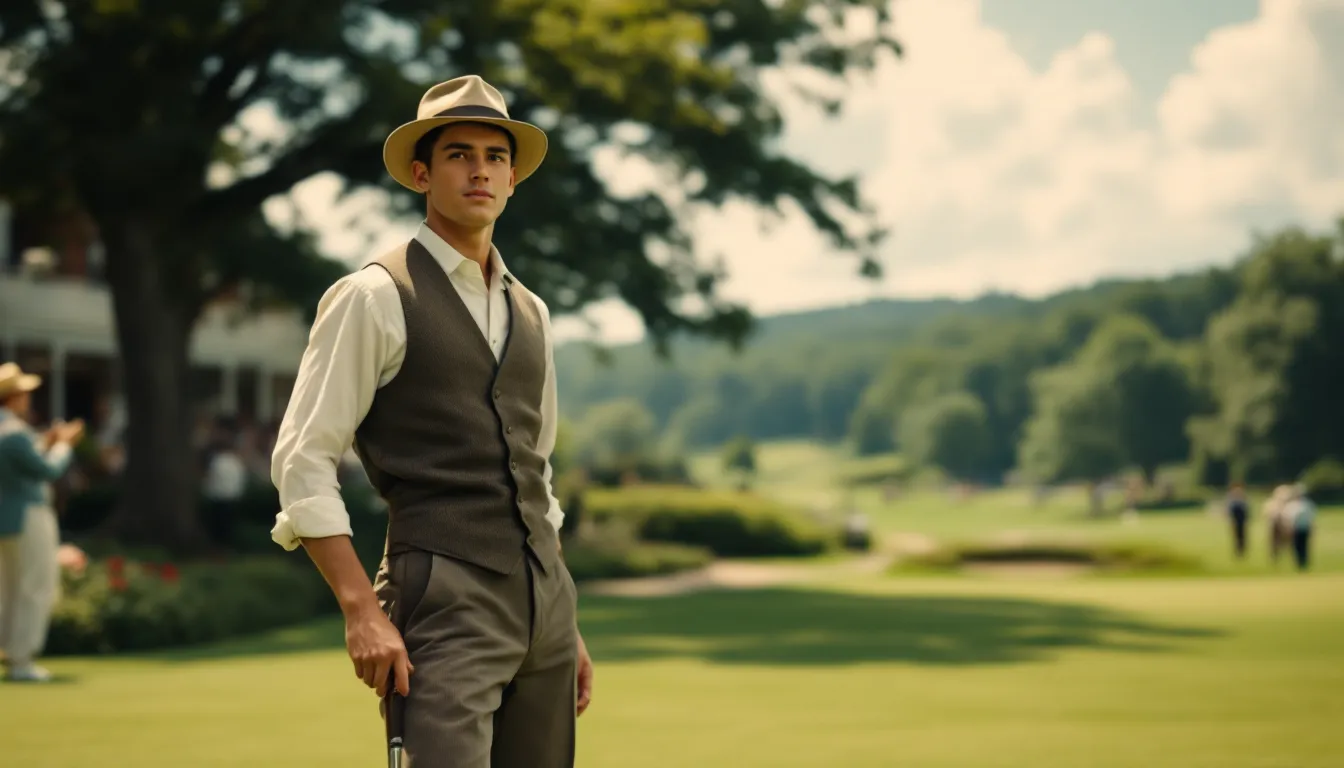
Most gamers know the underdog story arc by heart. You’re outmatched, out-leveled, and everyone expects you to lose, then you pull off the impossible clutch that no one saw coming. The Greatest Game Ever Played (2005), directed by Bill Paxton, taps into that exact emotion, but it does so through the lens of early 20th-century golf instead of a ranked match or tournament bracket. At first glance, a period sports drama about golf might not scream “must-watch” for the average gamer, but this film carries themes that resonate deeply with competitive gaming culture: class gatekeeping, the grind to mastery, and the moment when raw skill trumps established hierarchy.
Released over two decades ago, the film dramatizes the true story of Francis Ouimet, a working-class caddy who shocked the world by defeating British golf legends at the 1913 U.S. Open. It’s a classic David-versus-Goliath narrative, and while it doesn’t involve headshots or frame-perfect inputs, the psychological tension and emotional payoff mirror what makes esports moments legendary. In 2026, as competitive gaming continues to grow and underdog stories like Cinderella runs at major tournaments captivate millions, revisiting this film offers a surprisingly relevant lens on what it takes to compete at the highest level.
Key Takeaways
- The Greatest Game Ever Played successfully translates the psychological tension of underdog competition to golf, making it deeply relevant to esports and competitive gaming culture through themes of class barriers and mental fortitude.
- Shia LaBeouf’s grounded portrayal and Bill Paxton’s focused direction avoid melodrama, delivering authentic emotional beats that mirror the discipline and composure required in high-stakes tournament play.
- The film demonstrates that mastery requires more than raw talent—observation, intentional practice, and mentorship are essential elements in any competitive pursuit, from golf to ranked gaming.
- Francis Ouimet’s story resonates with modern gamers by illustrating how skill and determination can overcome structural disadvantages, a principle applicable to breaking into elite circles in both traditional and esports communities.
- While following a predictable underdog formula, the film’s earnest sincerity and expert pacing keep it engaging, delivering a 7.5/10 experience that respects audience intelligence without reinventing the genre.
What Is The Greatest Game Ever Played About?
Plot Overview and Historical Context
The Greatest Game Ever Played centers on Francis Ouimet (Shia LaBeouf), a 20-year-old amateur golfer from a working-class Massachusetts family. In 1913, golf was an elite sport dominated by British aristocracy and wealthy Americans. Francis grows up across the street from The Country Club in Brookline, teaching himself the game by watching the pros and caddying to earn money.
When the U.S. Open comes to his hometown, Francis enters as a last-minute amateur entrant. He’s pitted against Harry Vardon (Stephen Dillane), the reigning British champion and a six-time Open winner, along with other seasoned professionals. With his 10-year-old caddy Eddie Lowery (Josh Flitter) by his side, Francis defies all expectations, eventually forcing a playoff and winning in one of the most shocking upsets in sports history.
The film plays out like a tournament bracket, early rounds establish Francis’s skill and mental fortitude, mid-game sections build tension as the competition tightens, and the final playoff becomes a nail-biting showdown where every stroke matters. It’s structured like a best-of-three grand finals, complete with crowd reactions, commentary, and the weight of an entire underdog narrative hinging on a few decisive moments.
Why This Story Resonates With Gamers and Esports Fans
Francis Ouimet’s journey mirrors the trajectory of countless esports underdogs. Think of lower-bracket runs at EVO, unknown teams upsetting major-region favorites at Worlds, or solo queue grinders breaking into the pro scene. The film captures that same energy: an outsider with raw talent, no sponsorships, and everything to prove.
The class divide is especially relevant. In 1913, golf clubs were exclusive spaces where wealth and lineage mattered more than skill. Today’s gaming landscape has democratized competition in many ways, anyone with a PC or console can queue ranked, but gatekeeping still exists in the form of expensive setups, ping disadvantages, and the unspoken barriers that keep casual players from taking the leap into competitive play.
Francis’s story also emphasizes mental game, a concept every competitive gamer knows. It’s not just about mechanics: it’s about staying composed under pressure, managing tilt, and executing when it counts. The film’s depiction of Francis visualizing shots, blocking out doubt, and trusting his preparation feels remarkably similar to the pre-match routines and mental resets that top-tier players rely on today.
Performance and Direction: Bringing the Underdog to Life
Shia LaBeouf’s Portrayal of Francis Ouimet
Shia LaBeouf delivers a grounded, earnest performance that avoids the over-the-top heroics you might expect from a sports biopic. His Francis is humble, determined, and quietly confident, never cocky, but never self-doubting to the point of melodrama. LaBeouf was 19 during filming, close to Francis’s actual age, and that authenticity shows.
He captures the internal conflict of someone who’s skilled enough to compete but conditioned to believe he doesn’t belong. It’s the same tension you see in up-and-coming pros who dominate scrims but hesitate to call themselves “professional gamers” until they’ve proven it on LAN. LaBeouf’s Francis doesn’t trash-talk or showboat: he just plays his game, and that restraint makes the eventual victory feel earned rather than manufactured.
The supporting cast is solid, with Stephen Dillane as Harry Vardon providing a nuanced counterpoint. Vardon isn’t a villain, he’s a legend dealing with his own pressures and doubts. The mutual respect between Francis and Vardon adds depth, much like the sportsmanship you see between top competitors in fighting game or RTS communities after a brutal set.
Bill Paxton’s Directorial Vision
Bill Paxton, better known as an actor, directed The Greatest Game Ever Played with a clear focus on character-driven storytelling rather than flashy spectacle. He leans into the period setting without making it feel stuffy, and he frames the golf matches with surprising tension given the sport’s slower pace.
Paxton’s direction treats each shot like a critical play. Close-ups on Francis’s face, slow-motion swings, and reaction shots from the crowd all build intensity. It’s edited like a clutch moment in a high-stakes tournament, every decision matters, every mistake is costly, and the clock (or in this case, the scorecard) is always ticking.
The film also benefits from Paxton’s willingness to let quiet moments breathe. Not every scene is packed with dialogue or drama. Sometimes it’s just Francis walking the course, thinking, preparing. That reflective pacing mirrors the downtime between matches or the solo practice sessions that define the grind in competitive gaming.
Cinematography and Visual Storytelling
How the Film Captures the Intensity of Competition
Cinematographer Shane Hurlbut uses a mix of wide landscape shots and tight close-ups to convey both the beauty of the sport and the pressure on individual players. Wide shots establish the course, the crowd, and the scale of the event, while close-ups focus on hands gripping clubs, eyes tracking the ball, and the micro-expressions that reveal confidence or doubt.
The film employs slow-motion sparingly but effectively, reserving it for the most critical putts and drives. When Francis lines up a game-changing shot, the camera lingers on his preparation, the crowd’s silence, and the moment of release. It’s the visual equivalent of a tournament broadcast zooming in on a player’s hands during a match point.
One standout visual motif is the recurring image of Francis as a child watching through the fence of The Country Club, literally on the outside looking in. This imagery pays off in the final act when he walks onto that same course as a competitor. It’s a simple but effective way to externalize the internal journey from outsider to champion.
Period-Authentic Set Design and Atmosphere
The production design nails the early 1900s aesthetic without feeling like a museum exhibit. Costumes, architecture, and props all feel lived-in rather than overly polished. The film was shot on location in Massachusetts and Quebec, and the choice to use real golf courses adds authenticity.
The attention to period detail extends to the golf equipment, wooden clubs, gutta-percha balls, and the formal attire players wore even during competition. For gamers used to seeing retro titles or period settings in games like Red Dead Redemption 2 or Assassin’s Creed, the immersive historical context feels familiar and well-executed.
The film also captures the class divide visually. The wealthy club members are dressed in tailored suits and top hats, while Francis and his family wear simpler, practical clothing. The contrast is never heavy-handed, but it’s always present, reinforcing the thematic stakes.
Themes That Connect Sports and Gaming Culture
Class Barriers and Breaking Into Elite Circles
One of the film’s core themes is the rigid class structure that kept working-class players out of competitive golf. Francis isn’t just fighting opponents on the course, he’s fighting a system that believes talent and wealth are inseparable. His father explicitly tells him that golf “isn’t for people like us,” a line that echoes the discouragement many aspiring pro gamers hear from family or peers who don’t see gaming as a legitimate career.
The film doesn’t shy away from showing how these barriers manifest. Francis is denied entry to private clubs, dismissed by wealthy spectators, and treated as a novelty rather than a serious contender. It’s only through undeniable performance that he forces the establishment to take him seriously, a dynamic familiar to anyone who’s had to prove themselves in ranked lobbies, open qualifiers, or community tournaments.
In 2026, while gaming is more accessible than ever, economic barriers still exist. High-end PCs, low-latency monitors, and stable internet aren’t universal. The spirit of Francis’s story, overcoming structural disadvantages through skill and determination, remains deeply relevant.
Mentorship, Dedication, and the Grind to Master Your Craft
Francis benefits from the guidance of former golfer Arthur Ouimet and, indirectly, from watching Harry Vardon’s technique. The film emphasizes that natural talent alone isn’t enough: mastery requires observation, practice, and learning from those who’ve walked the path before you.
This mirrors the importance of coaching, VOD review, and community knowledge in competitive gaming. Whether it’s studying pro replays, joining a Discord to learn advanced tech, or grinding out thousands of hours in training mode, the path to the top is paved with intentional practice. Francis’s story reinforces that the grind isn’t glamorous, but it’s necessary.
The relationship between Francis and his caddy Eddie also highlights mentorship in reverse. Eddie’s unwavering belief in Francis helps him stay focused during moments of doubt. In gaming terms, Eddie is the supportive teammate who keeps morale high during a tough match, the coach who reminds you of your win conditions, or the community that hypes you up before a big tournament.
The Parallel Between Golf and Competitive Gaming
On the surface, golf and gaming seem worlds apart. But both are deeply strategic, require split-second decision-making under pressure, and reward consistency over flashy plays. Golf’s focus on mental composure, reading conditions, and adapting to opponents translates directly to competitive gaming.
The film also touches on the concept of tilt. Harry Vardon struggles with trauma from past failures, and his mental state affects his performance. Francis, by contrast, learns to stay present and trust his preparation. Managing emotions, avoiding autopilot mistakes, and staying clutch under pressure are universal skills across all competitive arenas.
Also, the structure of match play, where every hole (or round) is a discrete battle within a larger war, parallels best-of-three or best-of-five formats in fighting games, MOBAs, and tactical shooters. One bad hole doesn’t end the match, but every mistake compounds. The film captures that cumulative tension beautifully.
Strengths: What The Greatest Game Ever Played Gets Right
Authentic Emotional Beats and Character Development
The film avoids melodrama and lets the story’s natural drama carry the weight. Francis’s relationship with his father is strained but believable. His romance subplot is minimal and doesn’t derail the main narrative. The focus stays on the competition and Francis’s internal journey, which keeps the pacing tight and the emotional beats earned.
Character arcs feel organic. Francis doesn’t magically gain confidence overnight: he earns it through small victories and support from key people. Harry Vardon’s arc as a former champion grappling with legacy and self-doubt adds layers to what could have been a one-dimensional rival. Even Eddie, the kid caddy, has a clear motivation, he believes in Francis and wants to be part of something bigger than himself.
The film also respects its audience’s intelligence. It doesn’t over-explain every rule of golf or hold your hand through the emotional stakes. If you’re paying attention, the subtext is clear. For gamers used to reading between the lines in environmental storytelling or lore, this approach feels refreshing.
Pacing That Keeps You Engaged Until the Final Match
At just over two hours, the film doesn’t overstay its welcome. The first act efficiently establishes Francis’s background, the second act builds tension through qualifying rounds and social conflict, and the third act delivers the playoff showdown. There’s no filler or unnecessary subplots.
The playoff itself is structured like a finals match, with each hole functioning as a round. The back-and-forth scoreboard, crowd reactions, and shifting momentum create genuine suspense even if you know the outcome going in. It’s the same reason people rewatch legendary esports matches, the execution and atmosphere matter as much as the result.
Paxton’s pacing also benefits from knowing when to slow down. Quiet moments between Francis and Eddie, or Francis visualizing his shots, provide breathing room without killing momentum. It’s the editing equivalent of good map design in shooters, variety in tempo keeps the experience engaging.
Weaknesses: Where the Film Falls Short
Predictable Story Structure
As a based-on-a-true-story sports film, The Greatest Game Ever Played follows a familiar formula. Underdog faces adversity, trains hard, overcomes doubt, and wins against the odds. If you’ve seen Rocky, Rudy, or The Karate Kid, you know the beats.
The predictability isn’t necessarily a dealbreaker, sports stories thrive on familiar structures because the execution matters more than surprise. But the film doesn’t subvert expectations or add enough unique twists to make it feel fresh. There’s no major plot turn or unexpected complication in the third act. It’s a straight line from setup to payoff.
For viewers who prefer narratives with more complexity or moral ambiguity, this might feel too straightforward. It’s the cinematic equivalent of a well-designed but conventional single-player campaign, solid, satisfying, but not groundbreaking.
Limited Appeal for Non-Sports Audiences
While the themes are universal, the film’s focus on golf may alienate viewers who have zero interest in the sport. The pacing, while tight, still dedicates significant runtime to match sequences that require some investment in the competition. If you don’t care about who wins, the tension deflates.
Compared to films like Moneyball (which uses baseball as a vehicle for broader themes of analytics and innovation) or Rush (which injects high-octane visuals and personality clashes), The Greatest Game Ever Played is more grounded and traditional. It doesn’t transcend its genre in the way some sports films do.
For gamers specifically, the lack of direct gaming parallels in the dialogue or framing might make the connections feel like a stretch. The film wasn’t made with esports or gaming culture in mind, so any resonance is thematic rather than explicit. That said, the gaming industry’s growing interest in underdog narratives and competitive documentaries suggests there’s an audience willing to meet the film halfway.
How The Greatest Game Ever Played Holds Up in 2026
Comparing It to Modern Sports and Esports Films
Since 2005, the landscape of sports and competition films has evolved significantly. Documentaries like Free Solo (2018) and esports-focused films like League of Legends: Worlds coverage have raised the bar for capturing high-stakes competition. Streaming platforms have also produced series like The Last Dance and Drive to Survive, which blend sports drama with behind-the-scenes access and modern editing techniques.
The Greatest Game Ever Played predates this shift, and it shows. The film is more traditional, favoring classic narrative structure over documentary realism or meta-commentary. It doesn’t have the raw, handheld energy of Uncut Gems or the stylized intensity of Whiplash. It’s earnest, polished, and straightforward.
That said, its earnestness is also its strength in 2026. In an era of ironic detachment and cynical takes, the film’s genuine belief in hard work, respect, and sportsmanship feels almost countercultural. It doesn’t try to deconstruct the underdog story, it embraces it fully. For viewers tired of subversive narratives, that sincerity is refreshing.
Critical reception platforms like Metacritic gave the film mixed reviews upon release, with praise for performances but criticism for predictability. In hindsight, those critiques hold, but the film’s thematic resonance has aged better than its Rotten Tomatoes score might suggest.
Lessons for Today’s Competitive Gamers
Francis Ouimet’s story offers several takeaways for anyone grinding toward competitive success:
- Mental game is half the battle. Raw mechanics matter, but composure under pressure separates good players from great ones.
- Respect your opponents, but don’t be intimidated. Francis admired Vardon but didn’t let that admiration turn into fear.
- Preparation beats talent when talent doesn’t prepare. Francis’s disciplined practice and course knowledge gave him an edge over more naturally gifted players.
- Find your Eddie. Whether it’s a coach, teammate, or community, having people who believe in you makes the grind sustainable.
- Prove it on stage. No amount of talk or pedigree matters once the match starts. Let your performance speak.
These lessons are timeless, and they apply whether you’re climbing ranked in Valorant, competing in Street Fighter 6 locals, or preparing for a Rocket League regional.
Who Should Watch The Greatest Game Ever Played?
This film is ideal for gamers who appreciate underdog stories, sports dramas, or competition narratives with emotional depth. If you enjoyed King Richard, Remember the Titans, or even the tournament arcs in anime like Haikyuu.., you’ll likely find value here.
It’s also a solid pick for players interested in the mental side of competition. If you’ve ever choked a match due to nerves, struggled with self-doubt, or wondered how pros stay calm in grand finals, Francis’s journey offers relatable insights.
Casual viewers looking for high-energy action or innovative storytelling might find it too conventional. It’s not a flashy film. But for those willing to meet it on its own terms, it delivers a well-crafted, emotionally satisfying experience.
Parents and educators might also appreciate it as a family-friendly film that emphasizes perseverance, respect, and breaking barriers, values that translate well beyond sports or gaming. Unlike many modern competitive narratives that lean into toxicity or drama, this film keeps its focus on personal growth and earned success.
Publications like Game Informer have increasingly covered the intersection of traditional sports films and esports culture, noting that narratives like Francis Ouimet’s resonate with a generation raised on competitive gaming.
Final Verdict: Is The Greatest Game Ever Played Worth Your Time?
The Greatest Game Ever Played is a competent, heartfelt sports drama that doesn’t reinvent the wheel but executes its formula with skill and sincerity. Shia LaBeouf’s grounded performance, Bill Paxton’s focused direction, and the film’s thematic resonance with competitive culture make it more than just a period piece about golf.
For gamers, the film offers a surprisingly relevant lens on what it takes to compete at the highest level. The mental fortitude, class barriers, and underdog energy all mirror dynamics in esports and competitive gaming communities. While it doesn’t explicitly reference gaming, the parallels are easy to draw and genuinely compelling.
The film’s weaknesses, predictable structure and niche subject matter, are real but not fatal. If you’re willing to invest two hours in a story about perseverance, respect, and clutch performance, you’ll walk away satisfied. It won’t blow your mind, but it will remind you why competition matters and why underdog stories never get old.
Platforms like Polygon have highlighted how traditional sports narratives continue to influence gaming storytelling, and The Greatest Game Ever Played stands as a solid example of that crossover appeal. It’s not essential viewing, but it’s far from a waste of time.
Score: 7.5/10
A well-executed underdog story with strong performances and timeless themes. Predictable but satisfying, especially for fans of competition narratives.
Conclusion
The Greatest Game Ever Played may not be on every gamer’s radar, but it deserves a spot on the watchlist for anyone who appreciates the emotional arc of competition. Francis Ouimet’s journey from outsider to champion captures the same spirit that makes esports Cinderella runs legendary, proof that skill, preparation, and heart can overcome entrenched hierarchies.
In 2026, as gaming culture continues to mature and explore its own narratives of competition and struggle, revisiting films like this one offers perspective. Not every story needs explosions, plot twists, or irony to resonate. Sometimes a straightforward, earnest underdog tale is exactly what you need, especially if you’re in the middle of your own grind.
Whether you’re a competitive player chasing your own bracket upset or a casual fan who loves a good sports movie, The Greatest Game Ever Played delivers a solid, emotionally grounded experience. It won’t change your life, but it might just remind you why you started competing in the first place.