Missed deliveries, driver conflicts, and last-minute route changes cost logistics companies thousands of dollars every month — not in theory, but in real operational losses. The right dispatch scheduling software turns that chaos into a predictable, repeatable process. Fleet.Care and six other platforms on this list represent the strongest options available to logistics teams heading into 2026. This guide breaks down what each tool does well, who it suits, and what to consider before committing.
What to Look for in a Dispatch Scheduling Tool
Not every platform fits every operation. A two-truck courier service has different needs than a regional freight carrier managing 200 vehicles. Before reviewing specific tools, it helps to know which capabilities actually move the needle.
The features that matter most in 2026 include:
A platform that checks all six boxes will pay for itself within months — often within weeks for high-volume operations.
Fleet.Care — Smart Fleet Dispatch for Growing Logistics Teams
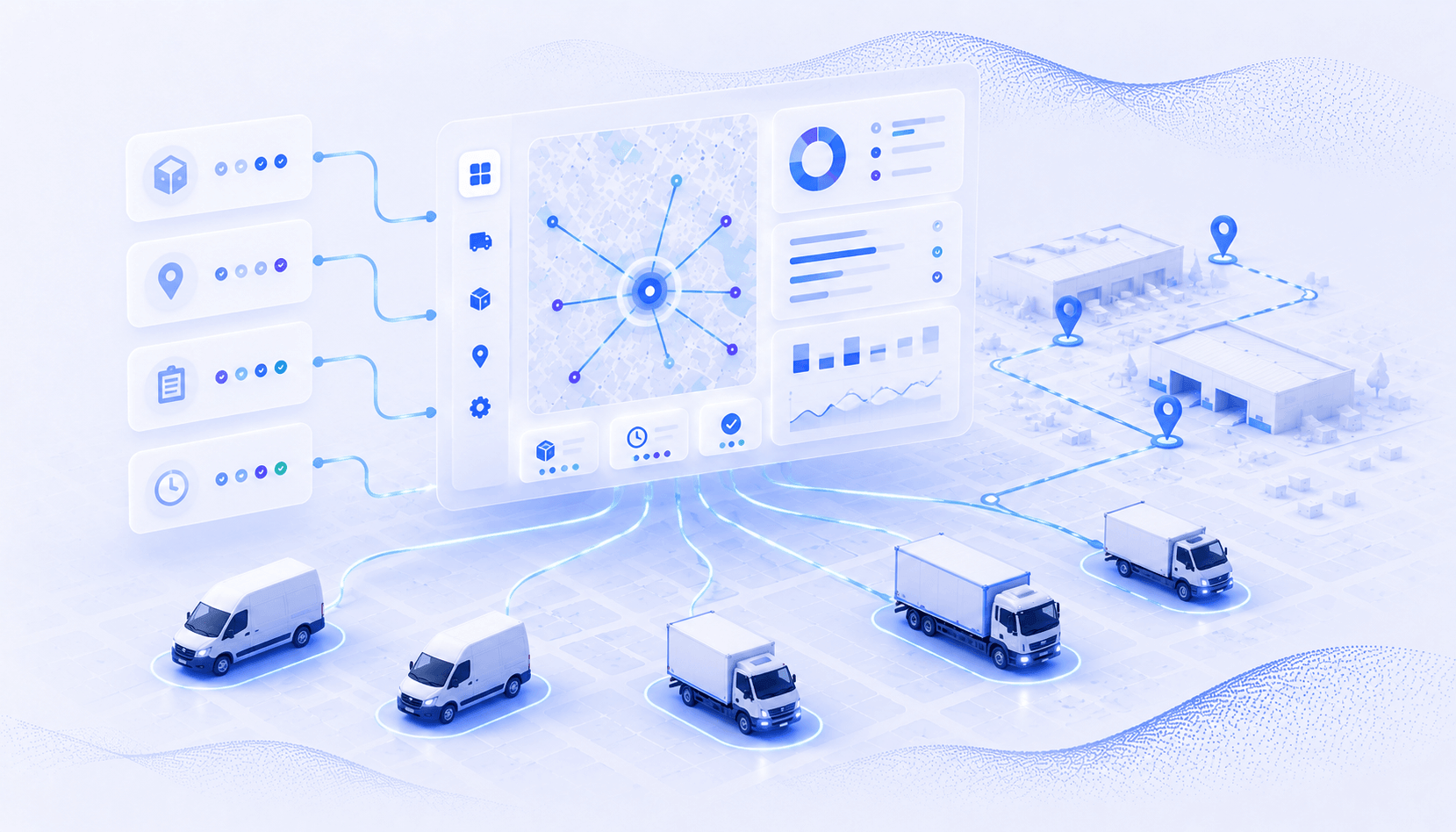
Fleet.Care is built for logistics businesses that need more than basic scheduling — they need a connected system that reduces dispatcher workload while keeping every driver accountable. The dispatch service combines real-time vehicle tracking, automated job assignment, and driver performance monitoring in a single interface that requires no technical background to operate.
What sets Fleet.Care apart is how it handles dynamic scheduling. When a delivery window shifts or a driver calls out, the system redistributes tasks automatically, flags conflicts, and updates ETAs across the board. Dispatchers see the full picture in one view rather than juggling spreadsheets and phone calls.
Fleet.Care suits mid-sized to growing fleets where manual coordination has already become a bottleneck. Teams using it consistently report fewer missed deliveries and lower fuel costs within the first 60 days.
Onfleet — Purpose-Built for Last-Mile Delivery
Onfleet has built a strong reputation specifically in last-mile delivery, where timing precision and customer communication matter most. The platform’s auto-dispatch feature assigns incoming tasks to the nearest available driver using configurable rules based on zone, capacity, and shift.
Its customer-facing features are a genuine differentiator. Automated SMS notifications with live tracking links reduce inbound customer service calls significantly — a measurable win for e-commerce and food delivery operations running at scale.
Onfleet integrates cleanly with Shopify, Zapier, and several warehouse management systems, making it a practical choice for businesses that already have a connected tech stack.
Samsara — Fleet Intelligence for Enterprise Operations
Samsara targets larger fleets that need hardware and software to work together. Its dispatch scheduling capabilities are built on top of a robust telematics platform — dashcams, engine diagnostics, and ELD compliance tools all feed into the same system where dispatchers manage routes.
The routing engine accounts for vehicle type, load weight, and regulatory hours-of-service limits, which makes it particularly strong for long-haul and regulated freight. Safety scoring for drivers is built in, which helps fleet managers identify coaching opportunities before incidents happen.
For enterprise-scale operations with compliance requirements, Samsara is a serious contender — though smaller teams may find the setup and licensing overhead more than they need.
Route4Me — Flexible Route Optimisation for Multi-Stop Schedules
Route4Me focuses on the optimisation problem: given 50 stops, 8 drivers, and a set of time windows, what is the most efficient assignment? The platform handles that calculation in seconds and has done so reliably for over a decade.
It supports a wide range of industries — field service, food distribution, retail delivery — because the logic is configurable. Dispatchers can set constraints like vehicle capacity, driver skill tags, and customer priority levels, and the algorithm factors all of them in.
The mobile app is functional and straightforward. Drivers receive their route with turn-by-turn navigation, and completed stops sync back to the dispatch console in real time.
OptimoRoute — Dispatch Scheduling with Predictive Planning
OptimoRoute earns its place on this list through planning depth. Where most tools optimise for today, OptimoRoute plans up to five weeks — useful for subscription delivery services, weekly service routes, and any operation that needs to balance driver hours across a longer horizon.
The breadcrumb tracking feature records the actual path each driver takes, which gives operations managers an accurate basis for future planning rather than relying on estimates. Analytics reports pull delivery performance data by driver, zone, and time window automatically.
Businesses handling recurring routes at medium volume — typically 20 to 500 stops per day — will find OptimoRoute’s planning logic fits their workflow better than a purely reactive dispatch tool.
Tookan — Customisable Dispatch for Niche Logistics Workflows
Tookan stands out for its extensibility. The base platform covers task assignment, tracking, and driver apps, but its marketplace of add-ons covers niche needs like age verification at delivery, signature capture workflows, and geofence-triggered alerts.
Businesses in regulated industries — medical supply, alcohol delivery, pharmacy logistics — often choose Tookan precisely because they can configure compliance steps directly into the dispatch workflow without building a custom integration.
The pricing model scales by task volume rather than seat count, which makes it accessible for smaller operations that need enterprise-grade features without enterprise-grade costs.
Bringg — Delivery Orchestration at Platform Scale
Bringg sits at the upper end of the market, designed for retail and logistics enterprises that manage delivery through multiple carriers, fulfilment partners, and last-mile providers simultaneously. The platform orchestrates across these partners from a single dispatch layer, so operations teams have one view regardless of who is physically executing the delivery.
Its machine learning engine predicts delivery windows with above-average accuracy and reroutes automatically when exceptions occur — a capability that becomes essential at the volume levels Bringg is built for.
Companies running omnichannel fulfilment at scale, where a single order might be picked at a store, handed to a third-party carrier, and tracked to the customer’s door, will find Bringg’s orchestration model genuinely useful.
The logistics industry is moving fast, and dispatch tools are moving with it. Platforms that added AI-driven rescheduling and predictive ETAs as premium features in 2023 are shipping them as standard in 2026. Waiting for the “right time” to upgrade rarely saves money — it usually just delays the savings. Start with a trial, run it against real data, and the right fit will become obvious quickly.