
Game shows have always lived in that weird space between competitive strategy and pure luck, the same mental calculus that makes battle royales and roguelikes addictive. The Wall, NBC’s high-stakes quiz and drop game hybrid, leans hard into that tension. Picture Plinko on steroids: a four-story pegboard where every answer you nail (or botch) sends colored balls cascading toward cash prizes that can swing from pocket change to seven figures. It’s been running since 2016, hosted by Chris Hardwick, and it’s still pulling in viewers who love watching ordinary people sweat through life-changing decisions. But does The Wall deliver the kind of strategic depth and production polish that makes a game show worth binging, or is it just another RNG fest dressed up in dramatic lighting? This review breaks down the mechanics, the stakes, the presentation, and whether it deserves a spot on your watch list.
Key Takeaways
- The Wall game show blends trivia, probability, and psychological pressure through a four-story pegboard mechanic where ball physics often outweigh contestant knowledge, creating drama over competitive integrity.
- The show’s isolation mechanic—separating decision-makers from answerers—generates authentic tension that elevates The Wall beyond traditional quiz show formats.
- While production values, visual spectacle, and host Chris Hardwick’s warmth are strong, the excessive RNG dominance and repetitive episode structure make the show best consumed in moderation rather than binged.
- The Wall excels at emotional storytelling but risks manipulation by strategically pairing contestant backstories with high-stakes outcomes for maximum viewer engagement.
- The game rewards accessibility over challenge, with mass-appeal trivia that rarely tests niche knowledge, making it entertainment-focused rather than competitive-integrity focused.
What Is The Wall Game Show?
The Wall is a game show that mashes trivia, teamwork, and a massive Plinko-style board into one high-stakes package. Two contestants, usually a couple, family members, or close friends, face off against a four-story vertical pegboard covered in pegs and slots. Each correct trivia answer drops a green ball: each wrong answer drops a red ball. Where those balls land determines the prize money, which can range from $1 to $1 million per slot.
The show’s hook is simple: answer questions, drop balls, watch your potential winnings climb or crater. But unlike traditional quiz shows where knowledge is king, The Wall throws in a chaos factor. You can nail every question and still walk away with less than someone who guessed wrong half the time, if the balls bounce your way.
How The Wall Works: Game Mechanics Explained
Here’s the breakdown of how the game operates, round by round:
Round 1: The Free Fall Round
Contestants don’t answer questions yet. They just drop three green balls to build an initial bank. This is pure RNG, no skill, just watching colored spheres bounce off pegs and land in slots. It’s the game’s way of establishing a baseline prize pool before the pressure kicks in.
Round 2-4: The Question Rounds
One contestant (the “answerer”) stays on stage to tackle multiple-choice trivia questions. The other contestant (the “decision-maker”) is isolated in a soundproof room with no clue how their partner is performing. For every correct answer, a green ball drops and adds to the pot. For every wrong answer, a red ball drops and subtracts from it.
Here’s where the game gets sadistic: the decision-maker can’t see the answerer’s performance but must choose between “take the current offer” or “trust the board.” They’re flying blind, making high-stakes calls based on gut and faith.
The Final Decision
After all balls drop, the decision-maker faces the ultimate choice: accept a guaranteed cash offer from the producers or take whatever’s on the board. The offer is always tempting, often in the $100K-$500K range, but the board could hold millions or next to nothing. The answerer watches from a monitor, unable to communicate. It’s a pressure cooker moment designed to maximize drama.
The Format: Rounds, Questions, and Decision Points
The format is elegantly brutal. Three question rounds, roughly seven questions each, with escalating stakes. Questions range from pop culture and history to science and sports, standard trivia fare, nothing too obscure. The multiple-choice structure keeps things moving: no one’s stuck for minutes agonizing over free recall.
Between rounds, the decision-maker faces contract offers. These are scripted moments where Chris Hardwick presents a guaranteed sum versus continuing. The offers scale with the game’s progress, and they’re calibrated to tempt but not satisfy. It’s the classic risk/reward loop that keeps viewers locked in.
Gameplay Analysis: Strategy vs. Luck
The Wall sells itself as a game of knowledge and nerve, but in practice, it’s a tug-of-war between skill and raw RNG. Understanding that balance is key to assessing whether the show respects its contestants or just puppets them through scripted chaos.
The Role of Knowledge and Trivia
Trivia does matter, to a point. The answerer’s performance directly influences how many green versus red balls drop. A contestant who answers 18 out of 21 questions correctly will drop more green balls than red, statistically tilting the board in their favor. That’s not nothing.
But the questions themselves aren’t particularly difficult. They’re designed for a general audience, not trivia buffs. Most players get 60-80% correct, which means the skill ceiling is low. You don’t need to be a Jeopardy. champion to compete: you need to be decent at pub trivia and stay calm under pressure. That accessibility is intentional, it keeps the game from becoming an intellectual gatekeep, but it also means knowledge alone won’t carry you.
Decision-Making Under Pressure
This is where The Wall flexes its psychological muscles. The decision-maker’s isolation is the show’s cruelest and most compelling mechanic. They sit in a soundproof room, watching balls drop with zero context. They don’t know if their partner is crushing it or floundering. All they have is rising or falling numbers and a series of agonizing binary choices.
It’s a fascinating study in trust and risk tolerance. Some contestants bail early, taking the first decent offer out of fear. Others ride it to the end, driven by faith in their partner or sheer stubbornness. The show mines this tension hard, cutting between the decision-maker’s uncertainty and the answerer’s visible stress. It’s effective drama, even if it sometimes feels engineered for maximum emotional extraction.
That final decision, guaranteed offer versus the board, is peak game theory. The offer is always a bird in the hand, but the board could hold a life-changing sum. Contestants have walked away with over $12 million: others have left with under $50K after refusing six-figure offers. It’s a coin flip with narrative weight, and the show knows it.
The Luck Factor: Drop Zones and Ball Physics
Let’s be blunt: the ball drops are where skill dies and RNG takes over. You can answer every question correctly, but if your green balls ping into low-value slots, you’re cooked. Conversely, a contestant who botches half the questions can still win big if their red balls land in low slots and their greens hit jackpot zones.
The physics are consistent, balls bounce off pegs in predictable patterns, but there’s no way to aim. It’s pure probability. The board has high-value slots clustered near the center and edges, with low-value slots scattered throughout. Ball drops are chaotic enough that two identical releases can yield wildly different outcomes.
This is the game’s Achilles’ heel for anyone who values competitive integrity. The Wall is less a test of skill and more a slot machine with a trivia mini-game attached. That’s fine if you’re here for drama and spectacle, but frustrating if you want outcomes to reflect contestant ability. Game shows have wrestled with variance in competitive formats for decades, and The Wall leans hard into it rather than mitigating it.
Production Value and Visual Appeal
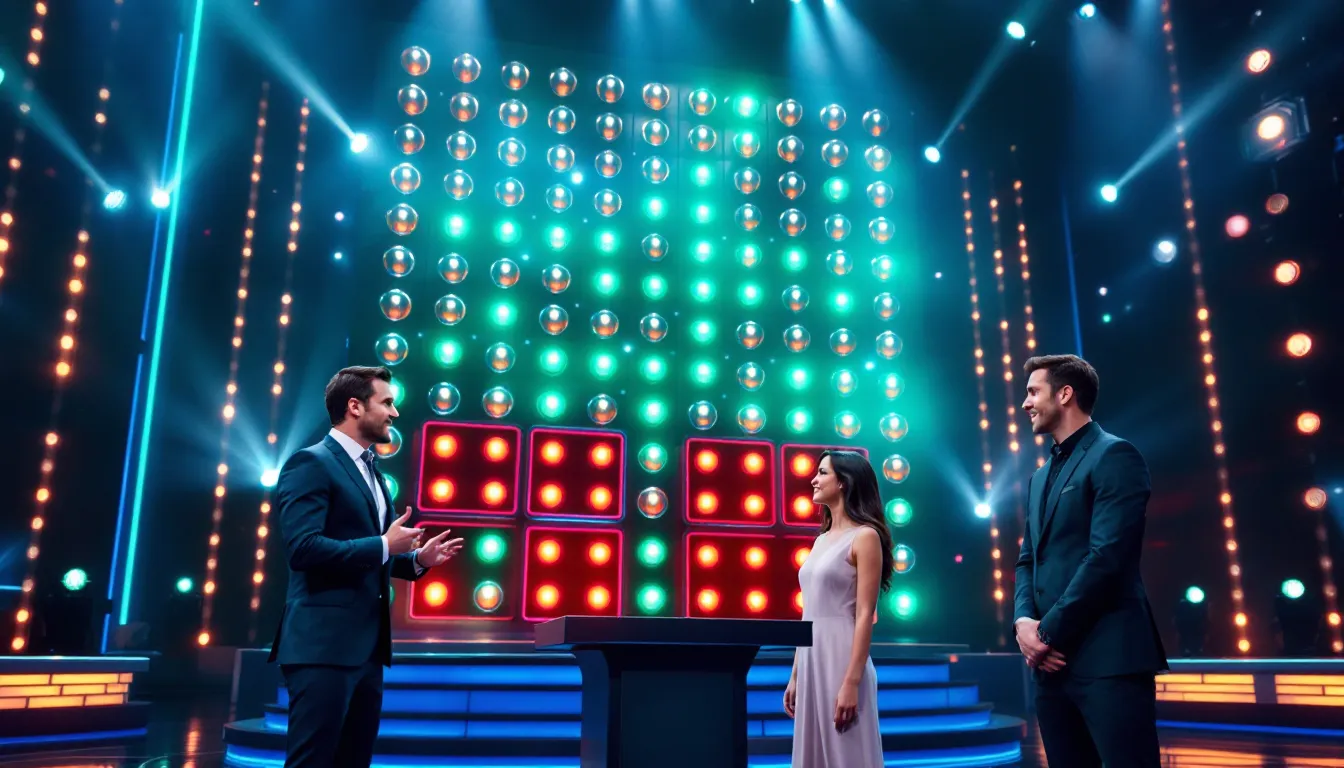
Whatever else you say about The Wall, it looks damn good. NBC invested in a set that’s equal parts functional game apparatus and visual spectacle, and it pays off every episode.
The Wall’s Physical Design and Scale
The wall itself is the star. Standing four stories tall, it’s an imposing piece of engineering covered in rows of pegs and illuminated slots. When balls drop, you feel the scale, cameras capture the full descent, following each sphere as it bounces, ricochets, and eventually settles into a slot. The sound design amplifies the experience: every peg collision echoes, every slot landing triggers a distinct audio cue.
The board’s LED slots shift colors based on value, red for low amounts, green and gold for high amounts, creating a dynamic visual that’s easy to read even in quick cuts. It’s gamified in the best sense: the wall communicates information instantly, no clunky graphics or voiceover needed.
Contestant areas are clean and functional. The decision-maker’s isolation room is minimalist, forcing focus on the monitor and the ticking clock. The answerer’s podium is straightforward, no gimmicks. The design language is modern without being sterile, which is harder to pull off than it sounds.
Lighting, Camera Work, and Presentation
Lighting is dramatic but not overwrought. The wall itself is backlit, creating depth and contrast. Spotlights track balls mid-drop, and color washes shift with the game’s emotional beats, cool blues during tense moments, warm golds during big wins. It’s effective without being distracting.
Camera work is where the production really shines. Directors use a mix of wide shots to establish scale, tight close-ups for contestant reactions, and tracking shots that follow balls down the wall. The editing rhythm matches the game’s pacing: quick cuts during ball drops, lingering shots during decision points. It’s cinematic in the way modern game review outlets appreciate, confident visual storytelling that enhances the experience without overwhelming it.
Host Performance and Show Pacing
Chris Hardwick has hosted The Wall since its 2016 debut, and he’s a solid fit for the format. He brings energy without overselling, empathy without melodrama. Hardwick’s background in nerd culture and improv comedy gives him a natural rapport with contestants, he can riff on trivia answers, crack a joke to ease tension, or pivot to genuine encouragement when someone’s spiraling.
His hosting style is conversational. He doesn’t lean into the grandiose “THIS IS THE MOMENT THAT WILL CHANGE YOUR LIFE” bombast that plagues some game shows. Instead, he narrates the game’s stakes clearly, checks in with contestants, and lets the wall do the heavy lifting. It’s a smart approach: the format is dramatic enough that it doesn’t need a host overselling every beat.
Pacing is where The Wall occasionally stumbles. Each episode runs about 43 minutes (minus commercials), and the structure is rigid: intro, free fall, three question rounds, final decision. When contestants are decisive and the ball drops flow smoothly, episodes clip along. But when the show leans too hard into contestant backstory or drags out decision points, momentum sags.
The worst offender is the final decision sequence. The show milks it, multiple camera angles, reaction shots, dramatic music swells, sometimes for five minutes or more. It’s effective the first few times you watch, but it becomes repetitive. The show could trim 10% of its runtime without losing emotional impact.
Emotional Storytelling and Contestant Backgrounds
The Wall invests heavily in contestant backstories. Each episode opens with a pre-taped segment introducing the team: their relationship, their struggles, their dreams for the prize money. You’ll meet couples saving for a house, parents funding their kid’s medical treatments, friends trying to keep a small business afloat. The production team knows how to find compelling narratives.
This is a double-edged sword. On one hand, it humanizes contestants and raises the stakes. You’re not just rooting for faceless trivia competitors: you’re invested in real people with real needs. When someone wins big, it feels earned. When they walk away with peanuts after rejecting a huge offer, it’s genuinely gutting.
On the other hand, it can feel manipulative. The show leans into sob stories hard, sometimes too hard. There’s a cynical calculus at work: tragic backstory + high stakes = maximum viewer engagement. It works, but it also makes the show feel engineered for emotional extraction rather than letting moments land organically.
Some episodes strike the right balance, giving enough context to care without turning into a Hallmark movie. Others overstay their welcome, spending too much time on backstory and not enough on gameplay. It’s inconsistent, and your tolerance for it will depend on how much sentiment you can stomach in your game shows.
What Makes The Wall Stand Out from Other Game Shows
The Wall occupies a unique niche in the game show ecosystem. It’s not a pure quiz show, not a pure physical challenge, and not a pure luck-fest. It’s a hybrid that borrows elements from multiple formats and blends them into something distinct.
Comparison to Classic Quiz Shows
Classic quiz shows like Jeopardy. or Who Wants to Be a Millionaire? reward knowledge and strategy. Outcomes are deterministic: answer correctly, win money. Answer incorrectly, lose money or go home. Skill is the dominant factor.
The Wall introduces massive variance. Two contestants can answer the same number of questions correctly and walk away with wildly different prizes based on ball physics. That makes it less competitive in the traditional sense but more dramatic. It’s less about crowning the smartest contestant and more about watching high-stakes gambling play out in real time.
The isolation mechanic also sets it apart. In Millionaire, you can phone a friend or poll the audience. In The Wall, the decision-maker is utterly alone, making choices with incomplete information. That’s a brilliant (if cruel) twist that elevates tension beyond typical quiz show formats.
Comparison to Physical Challenge Game Shows
Physical challenge shows like American Ninja Warrior or The Floor Is Lava reward athleticism, coordination, and endurance. Outcomes are visible and immediate: you either clear the obstacle or you don’t.
The Wall has a physical element, the board itself, but contestants don’t interact with it directly. They’re passive observers watching balls bounce. That removes the visceral thrill of physical competition but adds psychological pressure. You’re not fighting against your body’s limits: you’re fighting against uncertainty and probability.
The show’s closest cousin is probably Deal or No Deal, which also blends luck, decision-making, and dramatic reveals. But The Wall adds a skill component (trivia) and a teamwork dynamic (one answers, one decides) that Deal or No Deal lacks. It’s a tighter, more focused package.
Strengths: What The Wall Gets Right
The Wall excels in several key areas that keep it compelling even after multiple episodes:
Unique Format Blend
The combination of trivia, probability, and isolation creates a format that feels fresh. The game doesn’t fit neatly into existing categories, which makes it harder to predict and more interesting to dissect.
Visual Spectacle
The wall itself is an impressive piece of set design. Watching balls cascade down four stories never gets old, and the production team films it beautifully. The scale and physicality ground the show in a way that purely digital or small-scale game shows can’t match.
Psychological Tension
The isolation mechanic is genius. Separating contestants and forcing decisions without communication generates organic drama. You don’t need manufactured conflict when the format itself creates such intense pressure.
Accessible Stakes
The prize range is wide enough to feel life-changing ($1 million+ is possible) but grounded enough to feel attainable. Most contestants walk away with five or six figures, which is huge for ordinary people. The show doesn’t dangle impossible fantasy prizes: it offers real, tangible outcomes.
Strong Production Values
From lighting and camera work to sound design and editing, The Wall looks and feels premium. It doesn’t cut corners, and the attention to detail elevates the viewing experience.
Host Chemistry
Chris Hardwick brings warmth and energy without overselling. He’s a steady presence that enhances rather than dominates the show. His ability to connect with contestants and keep the pace moving is a quiet but crucial strength.
Weaknesses: Areas Where The Wall Falls Short
Even though its strengths, The Wall has notable flaws that keep it from being a top-tier game show:
Excessive RNG Dominance
The luck factor is overwhelming. Skill matters, but not nearly as much as ball physics. This makes the show less satisfying from a competitive standpoint. You can outplay your opponent in every measurable way and still lose because your green balls landed in $1 slots. That’s frustrating for viewers who value meritocracy.
Repetitive Structure
Every episode follows the exact same beat-by-beat structure. After a few episodes, you can predict every narrative turn: backstory, free fall, question rounds, agonizing decision, final reveal. The format is rigid, and that rigidity breeds predictability.
Manipulative Emotional Framing
The show sometimes leans too hard into tragedy porn. Contestant backstories are selected and edited for maximum emotional impact, which can feel exploitative. Not every episode needs a terminally ill child or a family on the brink of foreclosure to have stakes.
Drawn-Out Decision Points
Final decisions are milked for every ounce of drama. Multiple camera angles, reaction shots, dramatic pauses, it’s overkill. The show could trim 20-30% of these sequences without losing impact. Repetition dulls the edge.
Limited Trivia Difficulty
Questions are calibrated for mass appeal, which means they’re rarely challenging for anyone with above-average general knowledge. The trivia component feels more like a formality than a true test of intellect. That’s fine for accessibility, but it lowers the ceiling for competitive tension.
No Player Agency Over Physics
Contestants have zero control over where balls land. They can’t aim, adjust, or strategize around drop zones. It’s purely passive, which reduces the sense of agency and accomplishment. Winning feels more like surviving a slot machine than mastering a game. Analysis from gaming news sources often highlights how player agency impacts engagement, and The Wall offers almost none in its most critical moments.
Viewer Experience: Who Should Watch The Wall?
So who is The Wall for?
You’ll love it if:
- You enjoy high-stakes drama and watching people make impossible decisions under pressure.
- You’re a fan of hybrid formats that blend multiple game show elements.
- You like spectacle and production value, big sets, dramatic lighting, cinematic camera work.
- You don’t mind RNG-heavy outcomes and can appreciate chaos as part of the entertainment.
- You’re drawn to emotional storytelling and contestant backstories.
You’ll be frustrated if:
- You value competitive integrity and want outcomes to reflect skill over luck.
- You prefer tightly paced shows without manufactured drama or drawn-out decision points.
- You’re tired of emotional manipulation and sob story framing.
- You want deep, challenging trivia that rewards niche knowledge.
- You dislike repetitive formats and predictable narrative arcs.
The Wall is best consumed in moderation. Binge five episodes in a row and the cracks start to show, the repetition, the emotional manipulation, the lack of player agency. But as a one-off watch or occasional guilty pleasure, it delivers. It’s comfort food television: familiar, satisfying, not particularly challenging, but effective at what it sets out to do.
Conclusion
The Wall is a well-executed spectacle that prioritizes drama and emotional stakes over competitive purity. It’s a game show that understands its strengths, visual scale, psychological tension, accessible format, and leans into them hard. The production is polished, the host is solid, and the central mechanic (isolation + decision-making) generates genuine suspense.
But it’s also a show where luck often trumps skill, where emotional manipulation is baked into the formula, and where repetitive structure can dull the edge after extended viewing. It’s not a game show for purists who want outcomes to reflect merit. It’s a game show for people who want to watch ordinary folks navigate impossible choices and either triumph or crumble under pressure.
In 2026, The Wall remains a competent entry in the game show landscape, neither revolutionary nor forgettable. It’s worth watching if you’re in the mood for high-stakes drama wrapped in a slick package. Just don’t expect it to reward strategic thinking or offer much beyond its core loop. It knows what it is, and it executes that vision well enough to justify a spot on your queue.